Table of Contents
- What Proper Break-In Actually Does to New Engine Parts
- Your Break-In Checklist Before the First Ride
- Step 1: Run Heat Cycles and Vary the Throttle
- How to Break In a 4 Stroke Dirt Bike Without Glazing the Cylinder
- How to Break In New Piston Rings So They Actually Seat
- Motorcycle Engine Break In Oil Change Interval: What to Follow
- Break-In Myths Riders Still Repeat
- What to Inspect After the Break-In Window Closes
- Frequently Asked Questions
Last Updated: November 4, 2026
What Proper Break-In Actually Does to New Engine Parts
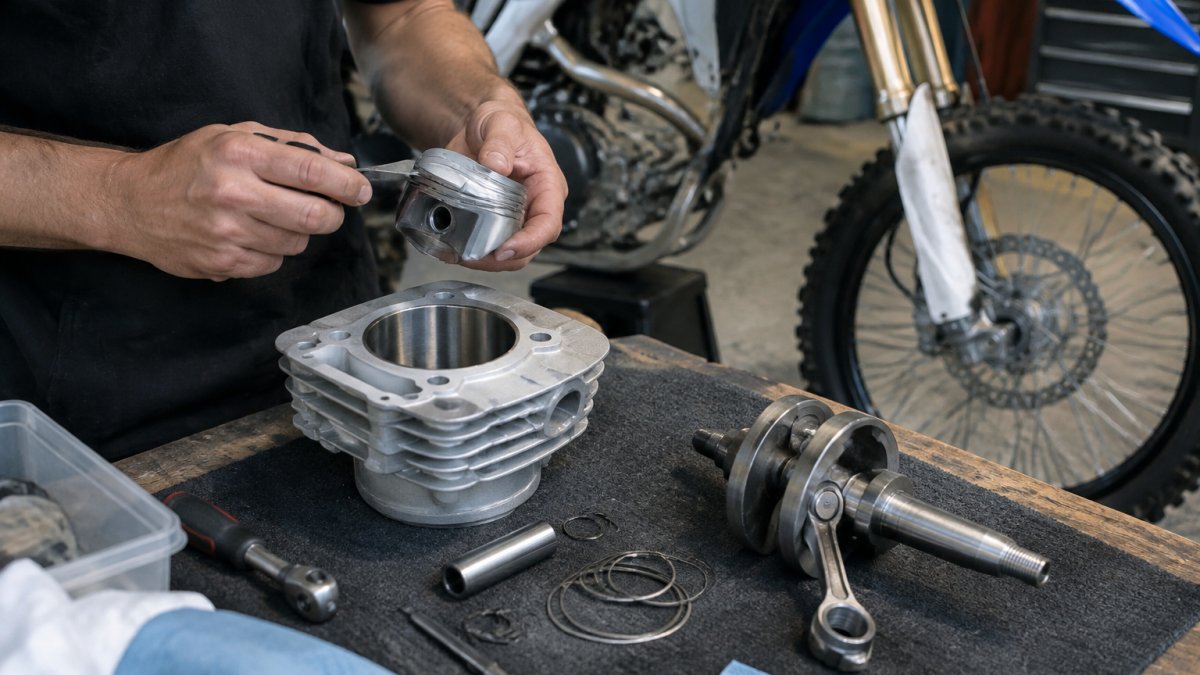
Knowing how to properly break in new dirt bike engine parts starts with seating new piston rings against the cylinder wall so the engine builds full compression and lasts. Get it wrong and you get blow-by, oil consumption, and a top end that never makes the power it should.
Here is the short version: new parts are not finished parts. Rings, cylinder walls, and bearings all have microscopic high spots. Break-in wears those down evenly.
According to ThumperTalk’s guide to new-bike break-in, the whole point is to physically mate the piston rings to the cylinder walls for proper compression. That is the job. Everything else is detail.
- Piston rings need pressure to press outward against the cylinder wall
- Cylinder walls need varied load to wear in evenly
- Bearings and gears need heat cycles to settle
The 1-hour procedure many manuals use is simple: 20 minutes at no more than 50% throttle, then 40 minutes at no more than 75% throttle. That is the frame we build on below.
Your Break-In Checklist Before the First Ride
Do these checks before the engine ever fires. Skipping them is the most common mistake we see.
- Check oil level and top off to spec
- Check coolant level on a liquid-cooled bike
- Verify chain tension and adjust if needed
- Check fastener torque on axle nuts, engine mounts, and triple clamps
- Clean or replace the air filter
- Set tire pressure
- Confirm the fuel mix on a 2-stroke
New bikes settle and shift. Bolts that were tight at the factory loosen in the first hours. RiiRoo’s break-in maintenance schedule puts the first checkpoint at 0 to 2 hours, when you recheck oil and bolts.
Watch out: a loose engine mount or axle nut in the first hour can turn a small vibration into a real problem. Torque everything before you ride.
Step 1: Run Heat Cycles and Vary the Throttle
Heat cycles are short runs that bring the engine to full temperature, then let it cool completely, and they are central to how to properly break in new dirt bike engine parts. Repeat them several times. That is how you seat parts without cooking them.
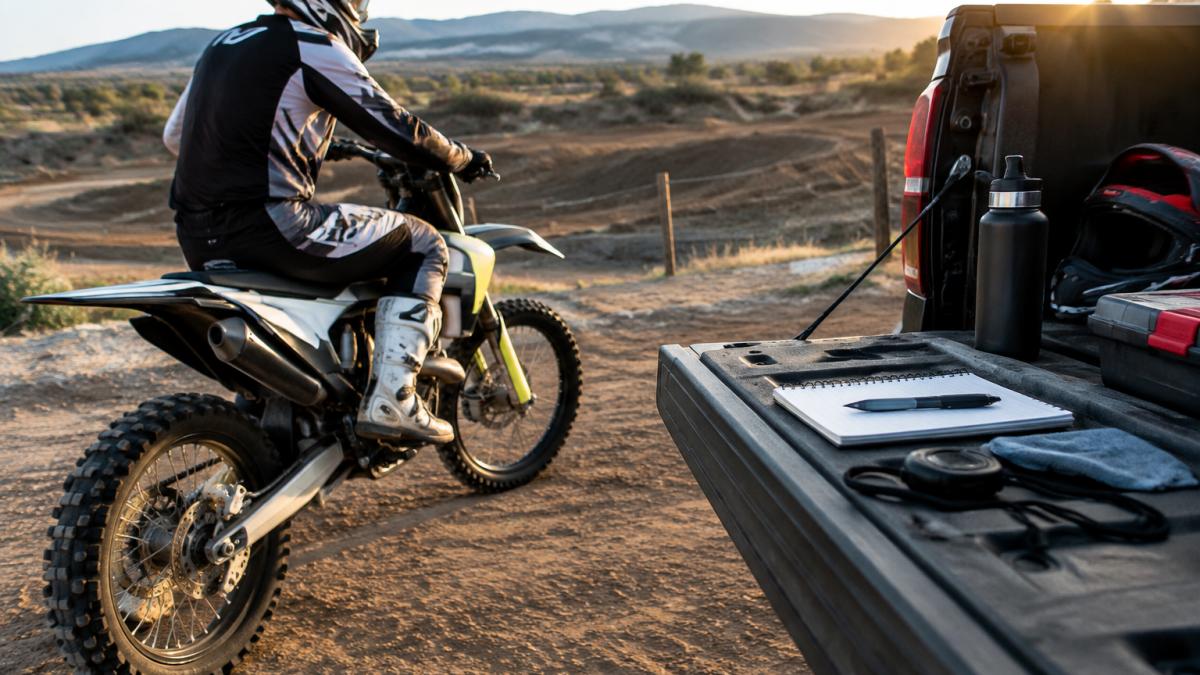
Here is the routine we recommend:
- Start the engine and let it idle for 30 seconds
- Ride gently for 10 minutes, varying revs through the RPM range
- Shut it down and let it cool completely
- Repeat three times
KTM World’s 2026 break-in guide recommends exactly this heat-cycle approach, then taking it easy for the first 30 minutes of real riding. ChapMoto’s break-in advice describes the same 10-minute run, full cool-down, three times.
Why Lugging and Idling Do More Harm Than Revs
Low RPMs under load stress an engine more than moderate revs do. Wiseco’s 2025 power blog notes that lugging the engine puts more stress on components than varied, moderate RPMs. So do not baby it. Load the engine, vary the throttle, and let it breathe.
How to Break In a 4 Stroke Dirt Bike Without Glazing the Cylinder
Glazing happens when a cylinder runs too cool or too easy for too long. The wall polishes instead of wearing in, and rings never seat. To break in a 4-stroke, load the engine in short bursts and vary throttle position.
- Avoid long idle periods
- Avoid constant low RPM cruising
- Roll on the throttle through the rev range
- Decelerate under engine braking to load the rings the other way
Four-strokes have more heat to manage. Watch engine temperature and coolant levels on the first rides. If the bike runs hot, shut it down and let it cool before the next cycle.
How to Break In New Piston Rings So They Actually Seat
Piston rings seat through pressure and heat, not time. You need cylinder pressure to push the rings against the wall, and you need varied load so the wear is even. That is the mechanism, and every choice you make during break-in either feeds it or fights it.
Here is what makes rings seat:
- Moderate acceleration under load, which builds cylinder pressure
- Varied throttle modulation, not one steady speed
- Full cool-downs between cycles so the metal contracts and stabilizes
- Clean oil with no metal shavings floating around
- A cylinder wall that is clean and correctly honed
The Pressure-and-Heat Mechanism
When combustion pressure rises, it forces the top ring outward against the cylinder wall. That contact, combined with the crosshatch pattern left by the hone, wears the high spots off both surfaces. The result is a matched pair: ring face and cylinder wall that seal against each other. Without load, there is no pressure, and without pressure there is no seating. That is why idling and light cruising do not break in an engine.
Oil Choice During Break-In
Avoid synthetic oil during break-in. ThumperTalk’s ring-seating notes recommend a 30wt high-mineral oil so the rings can seat. Synthetic is too slippery early on and can slow the wear-in process. A common pattern is to run a mineral or break-in-specific oil for the first oil change, then switch to the oil you plan to run long-term. If you are unsure what the manufacturer specifies, follow the owner’s manual for viscosity and change intervals.
What to Look For on the First Oil Change
Drain the oil into a clean pan and inspect it in good light. A small amount of fine metallic sheen is normal on a new engine. What you do not want to see is glitter, chunks, or a drain plug magnet loaded with thick paste. Those are signs of premature wear or a problem that needs attention before you keep riding. Wipe the magnet clean, note what you found, and compare it at the next change.
Watch out: if the oil looks like metallic paint or the filter is packed with debris, stop and diagnose before the next ride rather than topping off and continuing.
Motorcycle Engine Break In Oil Change Interval: What to Follow
Change the oil early and often during break-in. Fresh parts shed metal shavings, and those shavings are abrasive. Here is the interval we follow:
| Engine Hours | Action |
|---|---|
| 0-2 hours | Check oil, recheck bolts |
| 5 hours | Change oil, clean air filter, check valve clearance |
| 10 hours | Change oil again, adjust chain tension |
That schedule matches RiiRoo’s recommended break-in intervals. Manufacturer manuals often stretch break-in to 500 to 1,000 miles, per Carolina Cycle’s guidance, but on a dirt bike you should count engine hours, not miles.
Break-In Myths Riders Still Repeat
The “thrash it” crowd says babying a new engine is pointless and you should ride it hard from minute one. ADVRider forum discussions show this debate raging every season.
A middle ground exists. Hard, sustained abuse on a cold engine is harmful, while varied, moderate load is beneficial. Idling does not load the rings, so long idle periods do not seat them.
- Myth: break-in means never revving the engine
- Myth: synthetic oil from day one is fine
- Myth: you can skip the first oil change
- Fact: heat cycles and varied load seat parts fastest
What to Inspect After the Break-In Window Closes
Once break-in is done, do a full inspection. This is where you catch problems while they are small. Most guides stop at a checklist, but the real value is knowing what normal looks like and what should make you stop riding.
Oil and Filter Inspection
Drain the oil and check for metal shavings. Cut open the oil filter if you can, or inspect the pleats in good light. Fine, uniform metallic dust is expected after break-in. Sharp flakes, chunks, or a drain plug magnet with thick paste indicate a problem. Take a photo of what you find so you can compare it at the next change.
Spark Plug Reading
Pull the spark plug and read the insulator and electrode. A light tan or gray color is normal. Black, sooty deposits suggest a rich condition; white or blistered deposits suggest lean running or overheating. Either one is worth investigating before you ride hard again.
Fasteners, Chain, and Fluids
- Check valve clearance
- Inspect the air filter and clean or replace it
- Recheck fastener torque on the whole bike, especially engine mounts, axle nuts, and triple clamps
- Check chain tension and sprocket wear
- Look at coolant levels and hoses
Using an Hour Meter to Time the Checks
If your bike has an hour meter or you add one, use it to schedule maintenance instead of guessing. Log the hours at each check so you build a real service history. Many modern bikes also store diagnostic data through the ECU; a dealer or a compatible scan tool can read it if you suspect an issue.
When to Stop and Diagnose
If you find a defect, know your options before you call. Our guide to Motorcycle Parts Warranty and Return Policies: 2026 Guide covers what is covered and how returns work.
Watch out: a drain plug magnet with thick paste or a filter full of glitter is not normal break-in debris, and continuing to ride can turn a small problem into a failed engine.
Frequently Asked Questions
How long should the break-in period last on a new dirt bike?
Most manual-based procedures run about one hour of riding: 20 minutes at no more than 50% throttle, then 40 minutes at no more than 75%. Some manufacturers instead quote a distance range of 500 to 1,000 miles for seating piston rings. Whichever figure your manual gives, the first 15 miles should be gentle riding, and you should check oil and bolts at the 2-hour mark before pushing harder.
What happens if you don’t break in a new dirt bike engine properly?
The piston rings may never mate cleanly to the cylinder wall, which shows up as low compression, oil consumption, and blow-by. Glazed cylinder walls from idling or lugging are hard to reverse without pulling the top end. Riders who skip the break in dirt bike routine often end up doing a re-ring far earlier than planned, so follow the heat cycles and vary your RPM range.
Should you use synthetic oil during break-in?
Many builders recommend a 30wt high-mineral oil for the initial phase rather than synthetic, because mineral oil lets the rings seat against the cylinder wall. Once break-in is complete and the first oil change is done, switching to synthetic is fine. Never skip the early oil change: metal shavings from fresh machining need to come out of the motor.
How do you break in a 4 stroke dirt bike differently from a 2 stroke?
A 4 stroke carries its oil in the crankcase and feeds the valvetrain, so oil changes and valve clearance checks matter more during break-in. A 2 stroke mixes oil with fuel and has no valvetrain, so the focus shifts to heat cycles and avoiding a lean mixture. For how to break in a 4 stroke dirt bike, plan on an oil change at 5 hours and a valve check at the same interval.
Breaking in new engine parts takes patience, but it pays off in compression, power, and engine life. If you are refreshing the top end or upgrading your wheels and braking for track days, Supermoto wheels and tires stocks the motocross wheels, conversion kits, and components to match. Our team can help you pick the right setup for your bike, including parts for Surron and Talaria e-bikes. Get started with Supermoto wheels and tires and ride a bike that performs at its best.
