Table of Contents
- What Makes a Supermoto Wheel Set Right for Your KTM
- 17-Inch vs 16.5-Inch: Wheel Size and Rim Width Explained
- Supermoto Conversion Kit for KTM: What’s Included and What to Check
- KTM 500 EXC-F Supermoto Setup: Model-by-Model Fitment
- Tire Selection, Mounting, and Balancing for Supermoto Wheels
- Weight, Durability, and Performance: What the Specs Don’t Tell You
- Installation, Troubleshooting, and Legal Considerations
- Frequently Asked Questions
Last Updated: September 23, 2026
What Makes a Supermoto Wheel Set Right for Your KTM
The right supermoto wheels for KTM owners come down to three things: correct hub spacing for your model year, a rim width that matches your tire choice, and a weight saving you can feel in the first corner. Get them wrong and you will spend a month chasing fitment problems.
17-Inch vs 16.5-Inch: Wheel Size and Rim Width Explained
Seventeen-inch wheels dominate supermoto because tire choice is wider, street rubber is cheaper, and replacement is easy anywhere. The 16.5-inch front still shows up on race builds, but for most riders it creates more problems than it solves.
Why 17-Inch Wheels Dominate Street and Track Setups
A 17-inch front accepts the full range of sportbike and sport-touring tires, so you can run a soft compound for a track day and swap to something longer-wearing for commuting without changing wheels.
When a 16.5-Inch Front Makes Sense
The 16.5-inch front gives a slightly larger contact patch and quicker steering on a closed course, but limits you to race-spec slicks. If you ride on public roads at all, stick with 17 inches.
| Setup | Front Size | Best For | Tire Availability |
|---|---|---|---|
| Standard street/track | 17 x 3.5 | Most riders, dual use | Wide |
| Race-oriented | 16.5 x 3.5 | Closed-course only | Limited |
| Wide rear option | 17 x 5.0 | Big-bore builds | Wide |
Supermoto Conversion Kit for KTM: What’s Included and What to Check
A complete supermoto conversion kit for KTM should include both wheels, mounted tires, axle spacers, a cush drive, rotors, a rear sprocket, rim tape, and valve stems. Missing any one turns a weekend project into a two-week parts hunt.
Before ordering, verify these items against your bike:
- Axle diameter and spacer length for your model year
- Front brake caliper clearance with the larger rotor
- Rear sprocket tooth count and chain length adjustment
- Speedometer drive compatibility or a plan to recalibrate
- Cush drive condition, since worn rubber ruins new hub bearings
Skipping the speedometer check is the most common mistake we see. A bike geared for dirt wheels will read high or low once you fit 17s, and an inaccurate speedometer is both a legal and a safety problem. Plan the recalibration before your first ride.
KTM 500 EXC-F Supermoto Setup: Model-by-Model Fitment
The KTM 500 EXC-F supermoto setup is the most requested build we handle, and the most forgiving, but only if you match the kit to your exact generation. KTM has changed axle diameters, spacer stacks, and brake mounting across the 500 platform’s run, and a kit listed for one generation will not bolt onto another without modification.
Hub, Axle, and Brake Compatibility by Model Year
KTM’s full-size off-road platform (the 500 EXC-F shares its chassis with the 450 and 350 EXC-F) has run through several generations. The practical breakdown for supermoto conversion:
- 2008-2011 models: 20 mm front axle, 20 mm rear axle. Front caliper uses a specific bolt spacing that limits which aftermarket rotors fit without an adapter bracket.
- 2012-2016 models: 22 mm front axle, 20 mm rear axle. This is the generation most used conversion kits were originally tooled for, so used and new inventory is deepest here.
- 2017-2019 models: 22 mm front axle, 25 mm rear axle. The rear axle change is the one that trips people up, a rear wheel built for a 20 mm axle will not fit without new spacers and a different bearing bore.
- 2020-current models: 22 mm front axle, 25 mm rear axle, with revised fork lug spacing that can affect caliper-to-rotor alignment when running a 320 mm front rotor.
Spacer Stack and Cush Drive by Generation
Spacer length is where most DIY fitment failures happen. The front spacer stack on 2012-2016 bikes is shorter than on 2017+ bikes because the axle diameter grew but the fork lug width stayed similar. If your front wheel binds when you torque the axle, you have the wrong spacer stack, not a bent wheel.
Measure your existing axle diameter with calipers before ordering. It takes two minutes and prevents the single most common return we process. On 2017+ bikes, also measure the rear axle, many riders assume it is still 20 mm and order the wrong kit.
Speedometer and Gearing Changes by Generation
Every 500 EXC-F generation uses a different speedometer drive arrangement. Earlier bikes run a cable-driven unit off the front wheel; later bikes use an electronic sensor at the front axle. Swapping to 17-inch wheels changes rolling circumference and the speedometer reads high. The fix depends on your generation:
- Cable-driven units: swap the drive gear or fit an inline correction box.
- Electronic sensor units: reprogram through the dash menu or fit a signal correction module.
What to Verify Before You Order
Before you commit to any conversion kit for a 500 EXC-F, confirm these five items against your specific year:
- Front axle diameter (20 mm or 22 mm)
- Rear axle diameter (20 mm or 25 mm)
- Front caliper bolt spacing and rotor offset
- Speedometer drive type (cable or electronic)
- Cush drive width and bearing bore
Tire Selection, Mounting, and Balancing for Supermoto Wheels
Tire compound decides how your supermoto wheels feel far more than rim brand does. A dual-sport compound trades grip for wear; a sport compound grips hard but wears fast on commuting miles. For mixed use, a sport-touring compound is the honest middle ground, it warms up quickly, handles wet roads, and lasts. Track-only riders should run a soft sport compound and accept the shorter life.
- Check spoke tension after the first 100 miles
- Re-torque axle nuts to spec after the first ride
- Inspect rim tape at every tire change
- Replace valve stems when you mount new tires
Weight, Durability, and Performance: What the Specs Don’t Tell You
Most supermoto wheel content stops at the spec sheet. Nobody tells you what happens to a set after 5,000 miles of hard riding, or how much unsprung weight you are really removing.
Unsprung Weight: The Numbers That Matter
A stock KTM 500 EXC-F dirt wheel set, 21-inch front, 18-inch rear, with tubes and knobby tires, typically weighs 22 to 26 pounds for the pair, depending on tire choice. A quality 17-inch supermoto set with mounted street tires usually lands between 18 and 22 pounds. That is a real reduction, but where the weight sits matters more than the headline number.
What you feel in practice:
- Braking: Less rotating mass means the brake has less inertia to overcome. Initial bite feels sharper and the fork compresses less under hard braking.
- Suspension response: Lighter wheels let the fork and shock react faster over bumps. On a supermoto, this is the difference between the tire staying planted and the tire skipping.
- Turn-in: The smaller diameter drops the front end slightly and reduces gyroscopic force. Turn-in feels quicker, but the trade-off is reduced stability at high speed, a real consideration if you commute on the highway.
Long-Term Durability: What 5,000 Miles Actually Does
Initial purchase reviews tell you nothing about how a wheel set holds up. Here is what a season of aggressive riding looks like:
- Spoke tension: Expect to re-tension spokes after the first 100 miles and again around 500 miles. After that, a quality set holds tension with periodic checks. Cheap sets loosen continuously, and loose spokes lead to rim cracks at the nipple holes.
- Bearing wear: Stock bearings in budget wheels often show play within 3,000 to 5,000 miles, especially on bikes that see rain or pressure washing. Quality bearings with proper seals last significantly longer. The cush drive rubber is the hidden wear item, worn rubber transmits shock into the hub bearings and accelerates failure.
- Anodized finishes: Fade is cosmetic, but it is also a signal. Fading on the rim edge usually means the wheel has seen heat cycles from hard braking, which is normal. Fading at the hub usually means the finish was thin to begin with.
- Rim trueness: A quality rim stays true through normal riding. If your rim needs truing more than once a season, the spoke tension was never right to begin with.
The weight-to-performance ratio that matters is rotating mass at the rim edge, not total weight. And the durability metric that matters is spoke tension retention after the first 500 miles, that is the best predictor of how the wheel will hold up over seasons.
Fatigue Testing and What to Ask Before You Buy
Most wheel brands do not publish fatigue test data, and the ones that do rarely explain the methodology. When comparing sets, ask:
- What is the spoke gauge and material? Thicker stainless spokes resist fatigue better but add weight.
- What bearing spec is used, and are they sealed on both sides?
- Is the rim extruded or rolled? Extruded rims are generally stronger for a given weight.
- Does the hub use a cush drive, and is the rubber replaceable?
Installation, Troubleshooting, and Legal Considerations
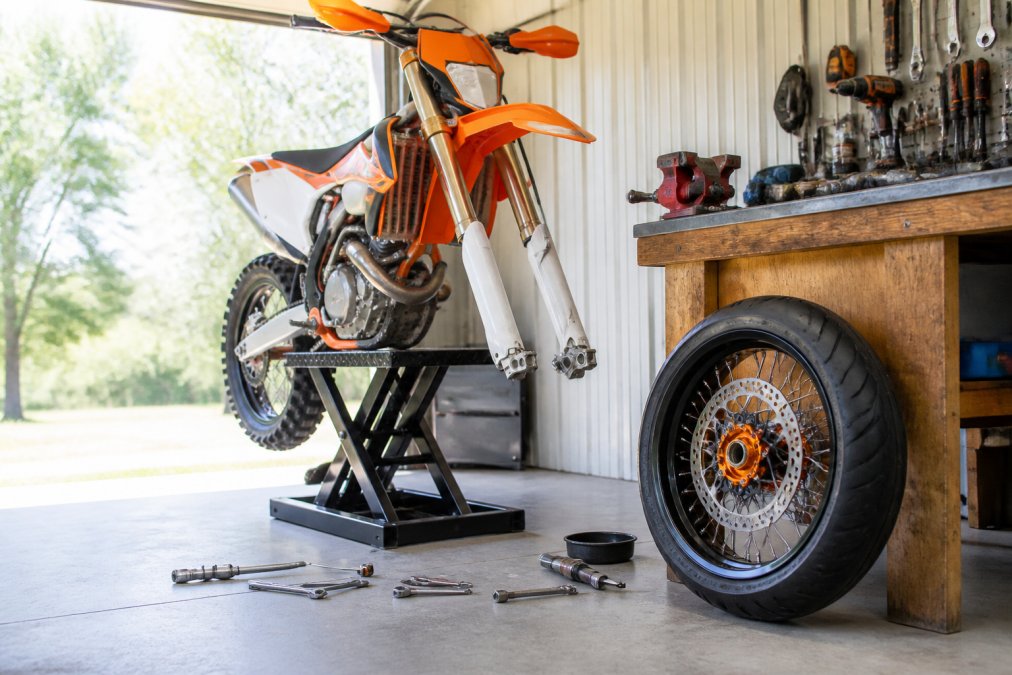
Installation is a straightforward swap if the kit is correct: remove the dirt wheels, fit the spacers and rotors, mount the new wheels, adjust the chain, and check brake clearance. Most riders finish in an afternoon.
Riders who want a complete, mounted, and balanced kit without sourcing spacers, rotors, and sprockets separately.
Frequently Asked Questions
What is the best rim size for a KTM supermoto conversion?
Most KTM supermoto builds use 17-inch wheels front and rear. The 17-inch size gives you the widest tire selection, from street-oriented sport tires to track-day rubber, and it keeps geometry close to stock when paired with the right axle spacers. A 16.5-inch front is sometimes used for dedicated race builds, but 17s are the practical choice for riders who split time between street and track. Check fitment for your specific model before ordering.
What does a supermoto conversion kit for KTM typically include?
A complete supermoto conversion kit for KTM usually ships with front and rear wheels, axle spacers, a cush drive hub, sprockets, rotors, and often tires already mounted and balanced. Some kits include a larger front brake rotor and caliper relocation bracket. Before buying, confirm the kit lists your exact model and year, since hub widths and axle diameters vary across KTM platforms. Missing spacers or the wrong cush drive are the most common fitment headaches.
Do I need to change my brakes when installing supermoto wheels?
You can run stock brakes with supermoto wheels, but most riders upgrade the front rotor to a larger diameter for better stopping power on pavement. A caliper relocation bracket is required when you step up rotor size. The rear brake usually stays stock. If you ride track days or aggressive canyon roads, the bigger front rotor is worth the extra cost. Confirm the rotor bolt pattern matches your hub before ordering.
Are tubeless supermoto wheels better than tubed?
Tubeless wheels reduce unsprung weight, run cooler, and let you plug a puncture on the side of the road instead of pulling the wheel. They also hold tire pressure more consistently, which matters for cornering feel. Tubed wheels cost less and are simpler to repair with a spare tube. For street-legal supermoto builds and track days, tubeless is the stronger choice. For pure dirt use, tubes are still fine.