Last Updated: October 26, 2026
Quick Summary
Rim width sets how a tire’s sidewall and tread sit, changing the tire profile, contact patch, and turn-in. A narrow rim rounds the tread for lighter turn-in, while a wide rim flattens it for more stability but slower direction changes. Wider is not automatically better.
- Most 5-inch supermoto rims are built around a 160-series rear tire and accept most 150-series tires.
- A 4.25-inch rim typically runs a 150/60-17, with a 140 as a fallback when clearance is tight.
- A mismatched front rim shows up as vague turn-in; a mismatched rear as wallowing mid-corner.
- A wider rim flattens the profile, so the contact patch grows and pressure changes feel more pronounced.
- Change the rim and tire as a matched pair, set pressure deliberately, then adjust suspension to suit.
Table of Contents
- How Rim Width Reshapes Tire Profile and Handling
- Supermoto Rim Width and Tire Size Chart
- Supermoto Wheel and Tire Fitment: Matching Rims to Rubber
- Where Rim Width Fits in the Whole Setup
- Frequently Asked Questions
How Rim Width Reshapes Tire Profile and Handling
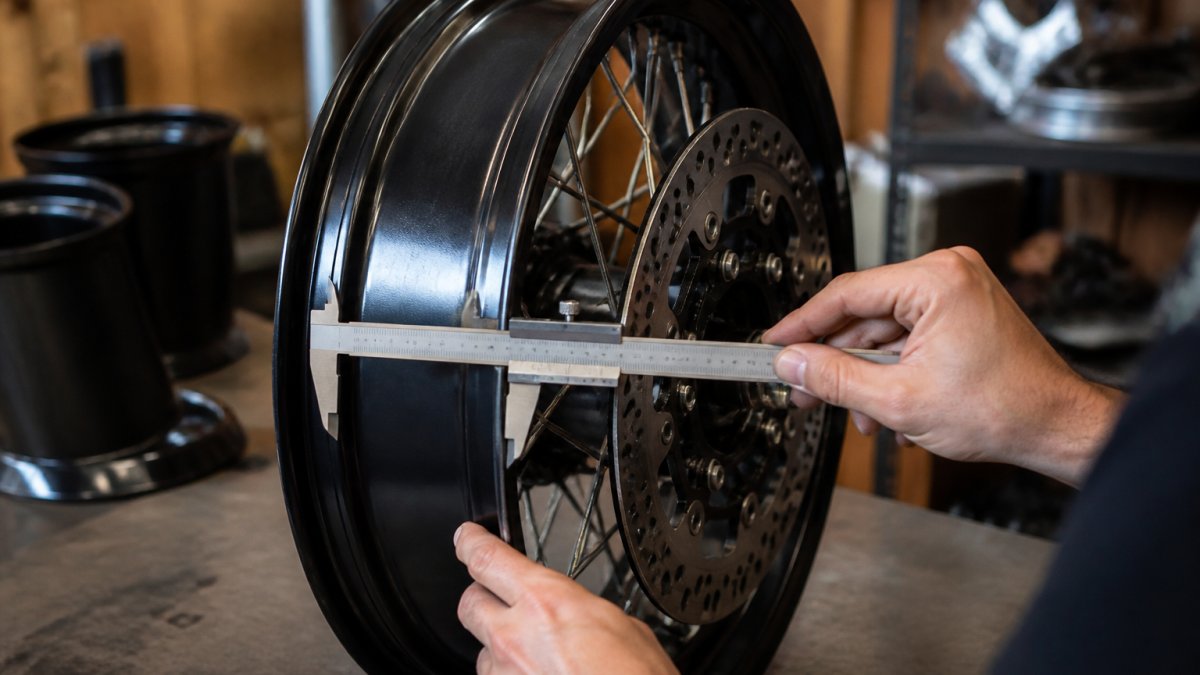
Rim width is the measurement between a wheel’s inner flanges, and it sets how a tire’s sidewall and tread sit, changing the tire profile, contact patch, and turn-in. A narrow rim bows the tire outward and rounds its tread; a wide rim flattens it across the crown, altering turn-in effort, sidewall support, and contact at full lean.
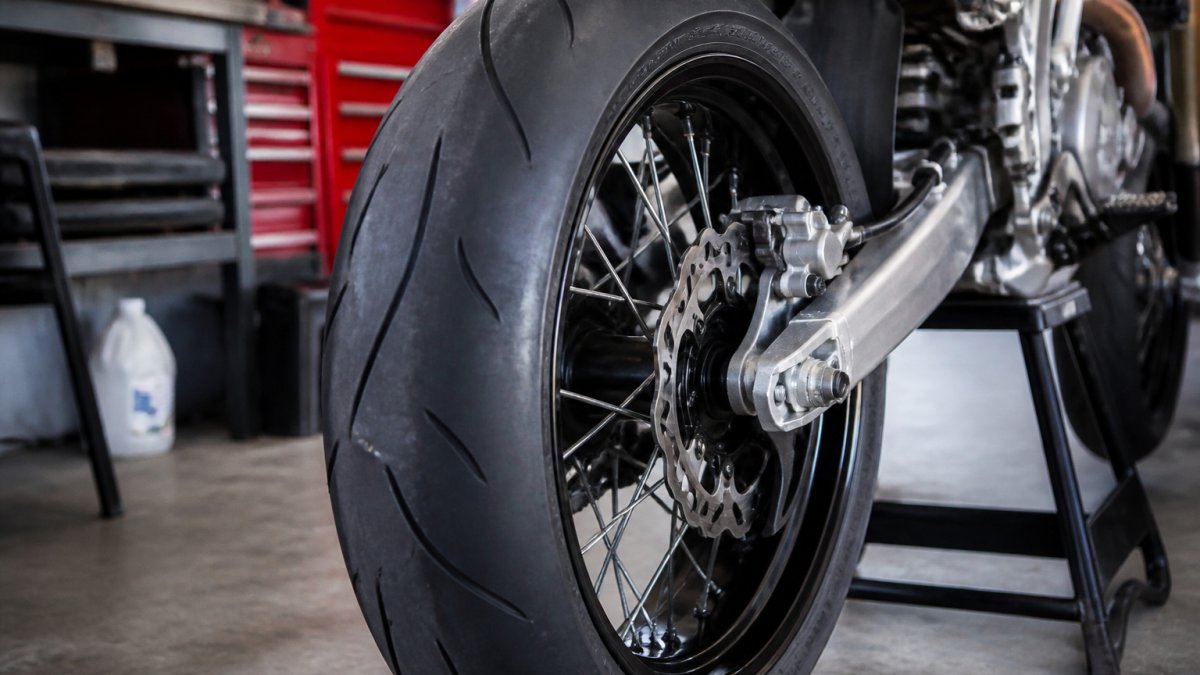
Wider is not automatically better: a flatter profile can slow direction changes and make the bike reluctant to tip in.
Supermoto Rim Width and Tire Size Chart
Fitment starts with matching rim width to the tire the rim was designed for. Most 5-inch supermoto rims are built around a 160-series rear tire and accept most 150-series tires, according to Moto X Industries’ 5-inch rim fitment guide. A 4.25-inch rim typically runs a 150/60-17, with a 140 as a fallback when clearance is tight.
| Rim Width | Typical Rear Tire | Common Use | Trade-off |
|---|---|---|---|
| 4.25 in | 150/60-17 | Tight clearance builds | Lighter turn-in, less sidewall support |
| 5.0 in | 160/60-17 | Standard supermoto rear | Flatter profile, more stability |
| 5.0 in | 150/60-17 | Alternative fitment | Slightly stretched sidewall |
These are starting points, not absolutes, check swingarm and chain clearance first. See our guide on what tire to run on a supermoto.
Supermoto Wheel and Tire Fitment: Matching Rims to Rubber
Fitment pairs a rim and tire so the sidewall sits where the manufacturer intended; get it wrong and you fight handling problems no suspension clicker will fix. Three things decide whether a pair works: rim width versus the tire’s design width, clearance at the swingarm, chain, and fender with the tire inflated, and front versus rear, front rim width changes steering response, rear width changes drive grip and stability. A mismatched front shows up as vague turn-in; a mismatched rear as wallowing mid-corner.
Browse supermoto wheels, Excel supermoto rims, or our best supermoto wheels comparison.
What tire pressure should I run with a wider rim?
Start from the tire maker’s specified pressure, then adjust in small steps. A wider rim flattens the profile, so the contact patch grows and pressure changes feel more pronounced; check cold and log them.
Does a wider rear tire always improve cornering?
No. A wide rear tire can add straight-line stability and drive grip, but it can also slow direction changes and increase lean effort. Treat width as one variable among several.
Where Rim Width Fits in the Whole Setup
Rim width is one lever among many, tire pressure, suspension sag, and frame geometry all interact with the profile you create. Change the rim and tire as a matched pair, set pressure deliberately, then adjust suspension to suit. For deeper buying context, read our complete supermoto wheels and tires guide.
Frequently Asked Questions
How does rim width affect supermoto handling?
Rim width changes the shape of the tire’s profile, which alters the contact patch and how the bike turns. A wider rim flattens the tire slightly, which can slow turn-in but improve straight-line stability. A narrower rim gives a rounder profile that turns more easily but may reduce sidewall support at high lean angles. Matching rim width to the tire’s intended range keeps handling predictable.
Can I use a wider tire on my existing supermoto rim?
Only within the tire manufacturer’s approved rim width range. Most 5-inch supermoto rims are designed for 160-series rear tires and accept most 150-series tires. Pushing a tire onto a rim outside its range can distort the profile, reduce sidewall support, and make handling unpredictable. Check the tire sidewall or spec sheet for the approved rim width before buying.
Should front and rear supermoto rims have different widths?
Yes, front and rear rims usually differ because they serve different jobs. The front carries less load and needs a rounder profile for turn-in and steering response, so it is typically narrower. The rear handles drive force and needs a wider contact patch for traction, so it is wider. Keeping each rim within its tire’s approved range matters more than matching widths front to rear.
Getting the rim and tire pairing right is the difference between a bike that turns predictably and one that fights you. At Moto X Industries, we stock specialized supermoto conversion kits, a wide range of parts for electric bikes including Surron and Talaria, and an extensive inventory of motocross racing wheels and components. Get started with Moto X Industries and build a wheel setup matched to how you actually ride.
