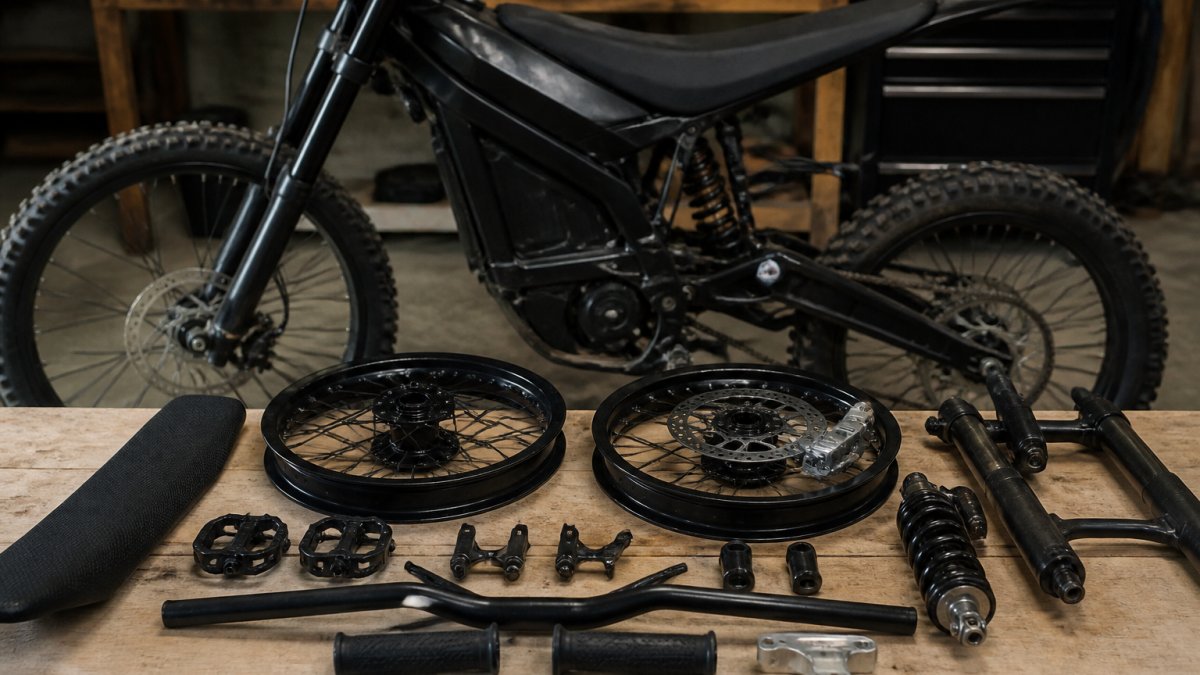
Last Updated: November 2, 2026
Quick Summary
The highest-value handling upgrade for a Talaria ebike is suspension, since stock forks and shocks are built to a price point and show it on rough trails or fast pavement. Set sag first, match spring rate to your riding weight, then tune rebound and compression damping to your terrain.
- Tires are the cheapest handling upgrade and the biggest grip and range gain per dollar.
- Confirm your exact model and year before ordering, because fork diameters and shock mounts differ across MX3, MX4, MX5, and X3.
- Better pads, a floating rotor, and fresh fluid improve brake feel and reduce fade on track days.
- Trail riders should start with tires and suspension; pavement riders should start with brakes and wheels.
- Fix grip and control before chasing power, and re-torque fasteners after the first ride.
Table of Contents
- Start With Suspension: The Talaria Suspension Upgrade That Changes Everything
- Talaria MX4 Suspension: Fitment, Spring Rates, and What Actually Fits
- Talaria Tires and Wheels: Where Grip and Range Come From
- Talaria Brake Upgrades: Pads, Rotors, and Control You Can Feel
- Contact Points: Handlebars, Grips, Foot Pegs, and Sprockets
- Upgrade Paths by Budget and Riding Style
- Installation Difficulty, Tools, and Maintenance
- Build Your Talaria Handling Package With Moto X Industries
- Frequently Asked Questions
Start With Suspension: The Talaria Suspension Upgrade That Changes Everything
If you own a Talaria ebike, the single highest-value change you can make is not more power. It’s suspension.
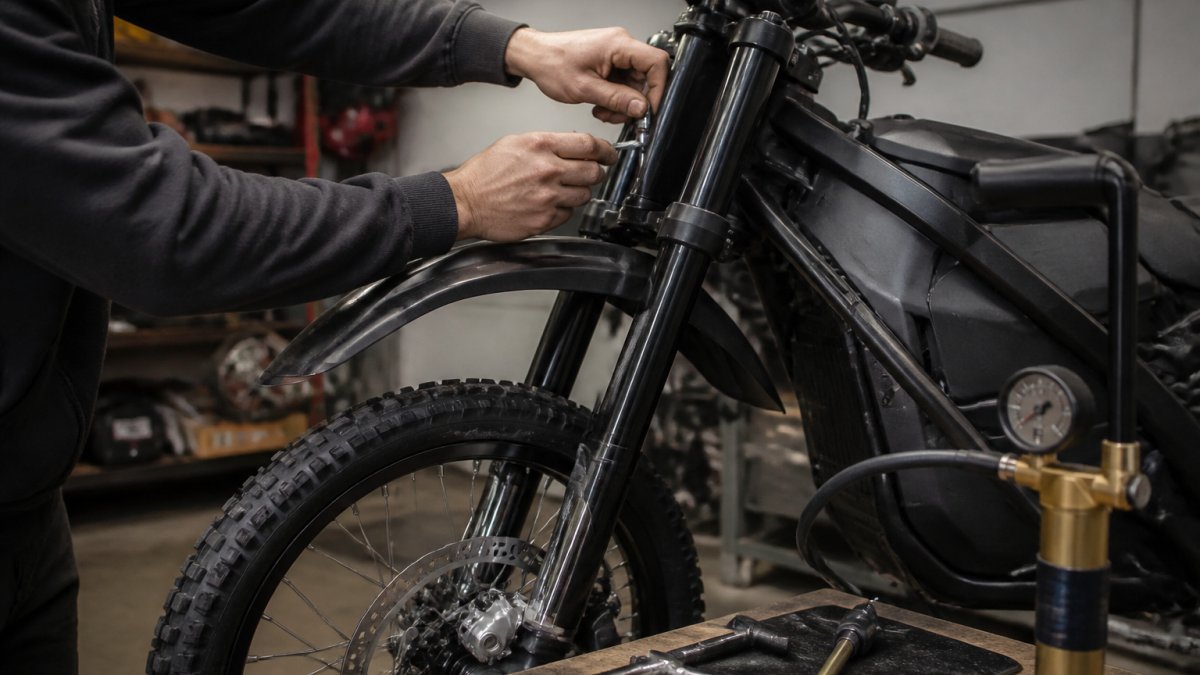
Suspension is a system, not a part. Bolting on a stiffer spring without matching damping can make the bike worse, not better, because the fork and shock need to be tuned to the rider’s weight and terrain.
Setting Sag and Damping by Rider Weight and Terrain
Set sag first. Sag is the amount the suspension compresses under the rider’s static weight, and it’s the foundation every other adjustment sits on. A lighter rider on a stock spring often sits too high; a heavier rider bottoms out. Match spring rate to rider weight, then tune rebound and compression damping to the terrain. Loose, rocky ground wants softer compression and quicker rebound. Hardpack and track days want firmer settings and slower rebound so the bike stays planted.
Get sag right and the rest of the bike starts making sense.
Talaria MX4 Suspension: Fitment, Spring Rates, and What Actually Fits
A common mistake with Talaria suspension is ordering a part that fits one model and assuming it fits the rest. The MX3, MX4, MX5, and X3 share a family resemblance, but fork diameters, shock mounts, and linkage geometry differ across models and years. Before you buy anything, confirm the exact model and year.
Fitment Matrix: What Fits Which Model
Use this as a starting checklist, not a substitute for confirming the part number against your bike’s year and VIN. Fitment changes between production runs, and a part that fits one year of a model may not fit the next.
| Component | MX3 | MX4 | MX5 | X3 | What to Confirm Before Ordering |
|---|---|---|---|---|---|
| Fork | Model-specific | Model-specific | Model-specific | Model-specific | Steerer tube diameter, axle size, travel, and crown offset |
| Rear shock | Model-specific | Model-specific | Model-specific | Model-specific | Eye-to-eye length, stroke, mount width, and spring rate |
| Linkage | Model-specific | Model-specific | Model-specific | Model-specific | Bearing sizes, bolt spacing, and progression curve |
| Spring rate | Rider-weight dependent | Rider-weight dependent | Rider-weight dependent | Rider-weight dependent | Rider weight with gear, terrain, and intended use |
| Triple clamp | Model-specific | Model-specific | Model-specific | Model-specific | Fork tube diameter and offset |
Riders should tell the seller what they actually ride, since a shock rated for aggressive off-road use can feel stiff and skittish on mostly pavement.
Setting Spring Rate and Sag by Rider Weight
Spring rate selection follows the same logic across models: match the rate to your riding weight and intended use. A rider who spends weekends on tight trails needs a different rate than someone chasing track-day lap times.
Start with sag. Sag is the amount the suspension compresses under the rider’s static weight, and it is the foundation every other adjustment sits on. A lighter rider on a stock spring often sits too high; a heavier rider bottoms out.
Measure sag with the rider in full gear, standing on the pegs in riding position. Record the number before and after any spring change so you can tell whether the new rate actually moved the bike in the direction you wanted.
If you are unsure, describe your weight, terrain, and riding style to the seller and ask them to confirm fitment in writing. That single step prevents most of the returns we see.
Do not mix a spring rated for one model with a shock body designed for another. Even when the shock physically mounts, the damping valving and linkage progression may be mismatched, which can make the bike harsher, not better.
Talaria Tires and Wheels: Where Grip and Range Come From
Tires are the cheapest handling upgrade you can make, and they’re also where grip and range come from. Tires are a meaningful handling change for real-world feel. Match the tread to your conditions: mixed-terrain tires for riders who split time between dirt and street, performance-oriented rubber for pavement and track days.
Tire choice is a handling decision, not just a cosmetic one. A Talaria upgrade video description recommends matching mixed-terrain or performance tires to riding style, claiming this can improve grip and range, though the result provides no measured test data.
Supermoto Wheel Setups for Pavement and Track Days
For riders converting toward supermoto use, wheel setup is the defining choice. Smaller, wider wheels with street-oriented tires sharpen turn-in and put more rubber on the road. If you’re planning that route, our guide to Top-Rated Aftermarket Supermoto Wheels for 2026 Track Days walks through specific options and what each setup is built for.
Talaria Brake Upgrades: Pads, Rotors, and Control You Can Feel
Brakes are an upgrade riders notice on pavement. Better pads, a floating rotor, and fresh fluid can improve feel and consistency over stock hardware. Start with pads. They’re inexpensive, easy to install, and they change lever feel immediately.
Then look at rotors. A floating rotor reduces fade under repeated hard stops, which matters on track days. To browse the full range of pads, rotors, and lines, see our Brakes Supermoto category.
Contact Points: Handlebars, Grips, Foot Pegs, and Sprockets
Handling starts where your body meets the bike. Handlebars, grips, and foot pegs are cheap, high-impact changes. A wider or taller bar changes your use and body position. Grips that fit your hand reduce fatigue on long rides. Wider pegs give your boots more purchase when you’re standing through rough sections.
Sprockets change how the bike delivers power to the ground. If you’re changing sprockets, our guide on What Size Sprocket for Supermoto Conversion explains how to pick the right size for your setup.
Upgrade Paths by Budget and Riding Style
Not everyone should start in the same place. The right first upgrade depends on how you ride, what you weigh, and what you want the bike to do better. Here is how we would prioritize, with the reasoning behind each step so you can adapt it to your own situation.
| Budget Tier | Best First Upgrade | Why It Pays Off | Install Effort | Trade-off to Know |
|---|---|---|---|---|
| Entry | Tires matched to terrain | Biggest grip and range gain per dollar | Low | Aggressive tread wears faster on pavement |
| Mid | Suspension spring and damping tune | Transforms control and confidence | Medium | Needs sag measurement and re-tuning after install |
| Mid | Brake pads and fluid | Immediate lever feel and consistency | Low | New pads on a worn rotor bed unevenly |
| Higher | Floating rotor and lines | Reduces fade on track days | Medium | More initial bite can feel abrupt in loose conditions |
| Higher | Wheelset change | Sharpens turn-in, unlocks supermoto use | High | Smaller wheels reduce ground clearance off-road |
Trail Riders
Start with tires and suspension. Trail riding rewards grip and compliance more than peak power. A tire matched to loose, rocky ground gives you confidence immediately, and a suspension tune matched to your weight keeps the bike from deflecting off square edges. Brakes matter less here than on pavement, but fresh pads and fluid are cheap insurance on long descents.
Pavement and Track-Day Riders
Brakes and wheels first. On pavement, the limiting factor is usually how late you can brake and how confidently the bike turns in. Pads and fluid give you immediate lever feel; a floating rotor reduces fade under repeated hard stops; a supermoto wheel setup sharpens turn-in and puts more rubber on the road. Suspension still matters, but the stock setup is often adequate until you are pushing harder.
Riders Who Split Time Between Dirt and Street
Tires, then brakes, then suspension. A mixed-terrain tire is the single change that makes a split-use bike feel competent in both environments. Brakes come next because pavement exposes fade quickly. Suspension comes third because a compromise setup that works acceptably in both environments is usually better than a setup optimized for one and harsh in the other.
The order matters less than the principle: fix grip and control before you chase power. A bike that stops and turns predictably is faster and safer than one with more power and less control.
How to Decide Between Two First Upgrades
If you are torn between two upgrades at the same tier, ask which one you notice more on your typical ride. If you feel the bike skipping and deflecting, suspension. If you feel the bike sliding or spinning, tires. If you feel the lever going soft, brakes. Fix the problem you actually feel, not the one that sounds most impressive in a parts list.
Installation Difficulty, Tools, and Maintenance
Most of these upgrades are weekend-wrench friendly. Tires and pads need basic hand tools. If you’re doing drivetrain work, follow a proper guide on How to Adjust Motorcycle Chain Tension (2026 Guide) so you don’t run the chain too tight or too loose.
Maintenance matters as much as the install. Check sag and damping settings after any suspension change. Re-torque fasteners after the first ride. Inspect pads and rotors for uneven wear. A well-maintained stock bike beats a neglected upgraded one every time.
Build Your Talaria Handling Package With Moto X Industries
Knowing which parts fit your exact model, match your terrain, and work together as a system can be the hard part. We can help with that.
Our inventory covers the components that actually change handling: brake parts, suspension hardware, controls, and accessories.
If you’re not sure what fits your model, ask before you order. Tell us your bike, your weight, and where you ride.
Get started with Moto X Industries and build a Talaria that handles as good as it looks.
Frequently Asked Questions
What should I upgrade first on a Talaria ebike?
Suspension is the first stop for most riders. Fork and shock work changes how the bike tracks over rocks, holds a line, and absorbs landings, and it affects every other part you bolt on. After that, tires and brake pads give the biggest gain per dollar. Handlebars, grips, and foot pegs come last because they mostly refine comfort and control rather than outright handling. If you ride pavement or track days, a supermoto wheel set moves higher up the list.
Which suspension upgrades fit Talaria MX3, MX4, and MX5 models?
Fitment differs by model and year, so check the listing against your exact bike before ordering. Check the listing for the specific model and year you ride. Measure your fork tube diameter and shock eye-to-eye length, then match those numbers to the product spec. A part that fits one model year often will not fit the next.
Do better tires improve Talaria handling?
Yes, and it is the cheapest handling change you can make. Talaria tires and wheels determine grip, so matching the tread to your terrain matters more than spending on power. A mixed-terrain tire suits dirt and gravel, while a street-oriented tire grips pavement far better. Riders report improved grip and range from a matched set, though no controlled test data backs a specific number. Run the pressure the tire maker recommends and adjust a couple of psi at a time.
Are supermoto wheels worth it for a Talaria?
For pavement and track days, yes. A 17-inch supermoto wheel set with street tires sharpens turn-in, adds contact patch, and lets you run proper sport rubber, which transforms braking and cornering confidence. For pure trail riding the stock dirt wheels are the better call. If you ride both, a second wheel set lets you swap in minutes rather than rebuilding the bike. Confirm axle and brake rotor fitment for your model before you buy.
