Table of Contents
- Is an Electric Bike Controller Upgrade Worth It?
- E-Bike Controller Compatibility: What Your Hardware Must Handle
- Higher Amp E-Bike Controller: Torque Gains vs. Battery Strain
- Step-by-Step: How to Install an E-Bike Controller Safely
- Frequently Asked Questions
Last Updated: October 6, 2026
Is an Electric Bike Controller Upgrade Worth It?
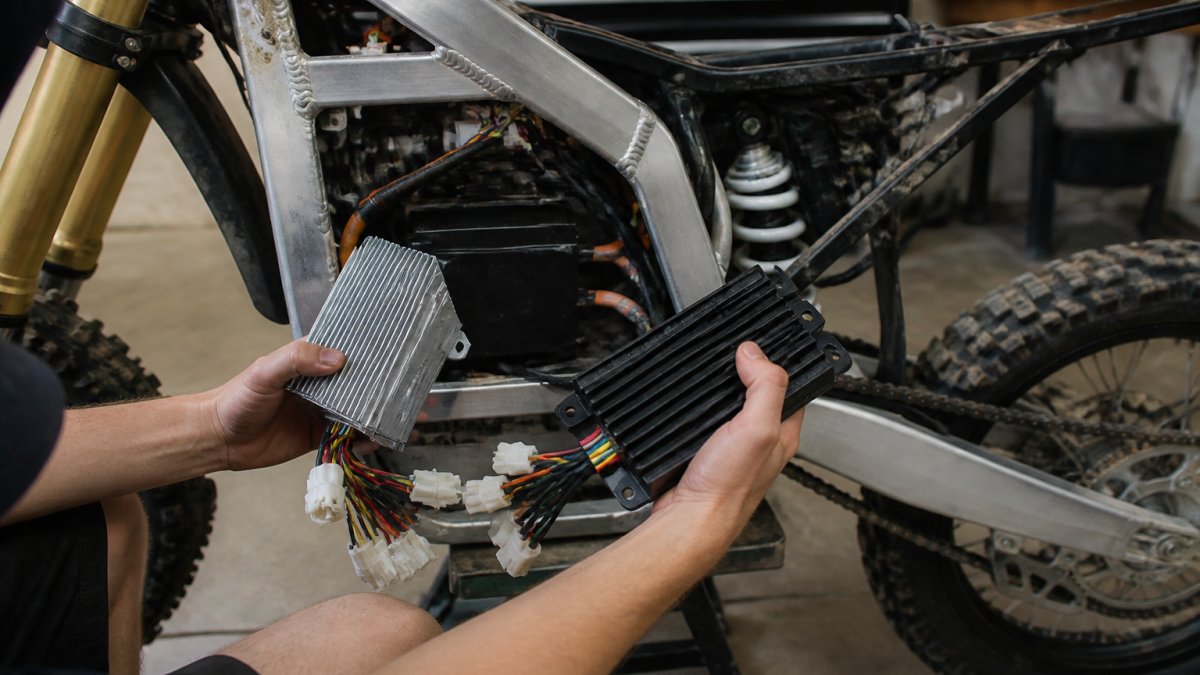
An electric bike controller upgrade is worth it only when your motor, battery, and wiring can handle more current than the stock unit allows. The controller meters power from battery to motor, so changing it changes how the bike feels, and how hard every other part works.
It’s worth it if your battery and motor have headroom and you want tunable throttle response; it’s not if you’re chasing top speed on a stock battery or can’t verify your BMS limits.
E-Bike Controller Compatibility: What Your Hardware Must Handle
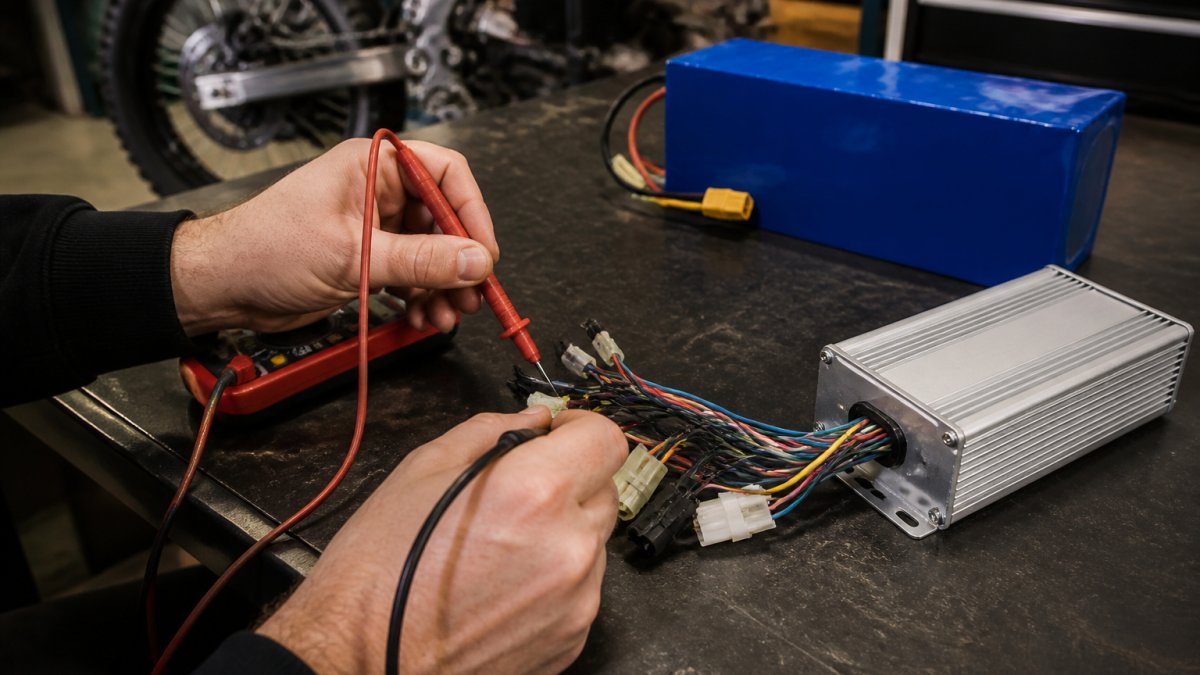
Compatibility comes down to four things: voltage, continuous current, connector type, and communication protocol. Miss one and the upgrade won’t run or won’t last.
Match nominal voltage first: a 72V controller won’t run safely on a 60V pack, and a 60V controller will cook on 72V.
Next, check your BMS (battery management system), which caps how many amps your pack can push. A controller pulling 60A continuous on a 40A BMS means voltage sag, thermal throttling, or a mid-ride shutdown.
Then check the harness: phase wires, hall sensors, and the throttle plug must match. Adapters work but add resistance and a failure point.
The most common mistake is buying a higher-amp controller before checking the BMS rating. Riders install it, hit the throttle, and the pack sags hard enough to trigger a low-voltage cutoff. The controller is fine. The battery takes the damage.
Before buying, confirm pack voltage matches the controller, find your BMS continuous discharge rating, confirm motor wattage, match phase wire gauge and connectors, verify hall sensor pinout, and check throttle type.
Higher Amp E-Bike Controller: Torque Gains vs. Battery Strain
A higher amp controller gives more torque and faster acceleration, but pulls harder on your battery and motor, and the trade-off shows up in heat.
Wattage is volts times amps: a 72V pack at 50A delivers 3,600W, while 80A asks for 5,760W, and your motor must convert that without melting.
You gain torque off the line, sharper throttle response, and peak power for short bursts. You pay with voltage sag, thermal throttling, shorter range, and more heat in the phase wires and connectors.
If you want more torque without stressing the pack, raise amps in small steps and watch your controller temperature after each ride. A controller that runs warm is fine. One that runs hot to the touch is telling you the motor or BMS is the real bottleneck.
| Change | What You Gain | What It Costs |
|---|---|---|
| +10A continuous | Noticeable torque bump | Slightly more heat, less range |
| +20A continuous | Strong acceleration | Real voltage sag risk |
| +30A or more | Aggressive power | BMS cutoff, motor stress, warranty void |
Programmable vs. non-programmable controllers is the other decision. A programmable unit lets you set current limits, throttle curves, and regen; a non-programmable unit is set at the factory. For most riders, programmable is worth it because you can dial power back when you need reliability.
Step-by-Step: How to Install an E-Bike Controller Safely
Safety first. Disconnect the battery and let the controller sit for a few minutes. Capacitors hold a charge.
- Disconnect the battery and remove the old controller.
- Photograph every connector before unplugging.
- Label the phase wires (usually yellow, green, blue).
- Match the new controller’s plugs to your harness; use adapters only if you must.
- Mount it with airflow around the heat sink.
- Reconnect the battery and test the throttle with the wheel off the ground.
- Ride gently for 10 minutes and check for heat.
Never test a new controller at full throttle on the first ride. A gentle break-in ride tells you whether the wiring and BMS are happy before you push hard.
Frequently Asked Questions
Will upgrading my e-bike controller make it faster?
It can increase peak power and torque, but top speed is usually capped by the motor’s RPM limit and legal speed limits. A higher amp e-bike controller pushes more current to the motor, which improves acceleration and hill climbing more than outright speed. If your battery’s discharge rate or BMS can’t supply the extra current, you’ll hit voltage sag and thermal throttling instead of real gains.
How do I know if a new controller is compatible with my e-bike?
Check four things: voltage (must match your battery pack), continuous current rating (must not exceed your BMS and motor limits), connector type (phase wires and hall sensors must match), and PAS/throttle signal type. Mismatched connectors or hall sensor wiring can fry the controller on first power-up. Write down your motor’s wattage, battery voltage, and BMS continuous amp rating before ordering anything.
Can a higher-amp controller damage an e-bike battery or motor?
Yes, if the controller pulls more continuous current than the battery’s BMS or the motor’s phase wires can handle. Overcurrent causes heat buildup, voltage sag, and accelerated cell degradation. Check your battery’s discharge rate and your motor’s rated continuous current before upgrading. If either is lower than the new controller’s output, you’ll need to upgrade those components too, which changes the cost-benefit calculation entirely.