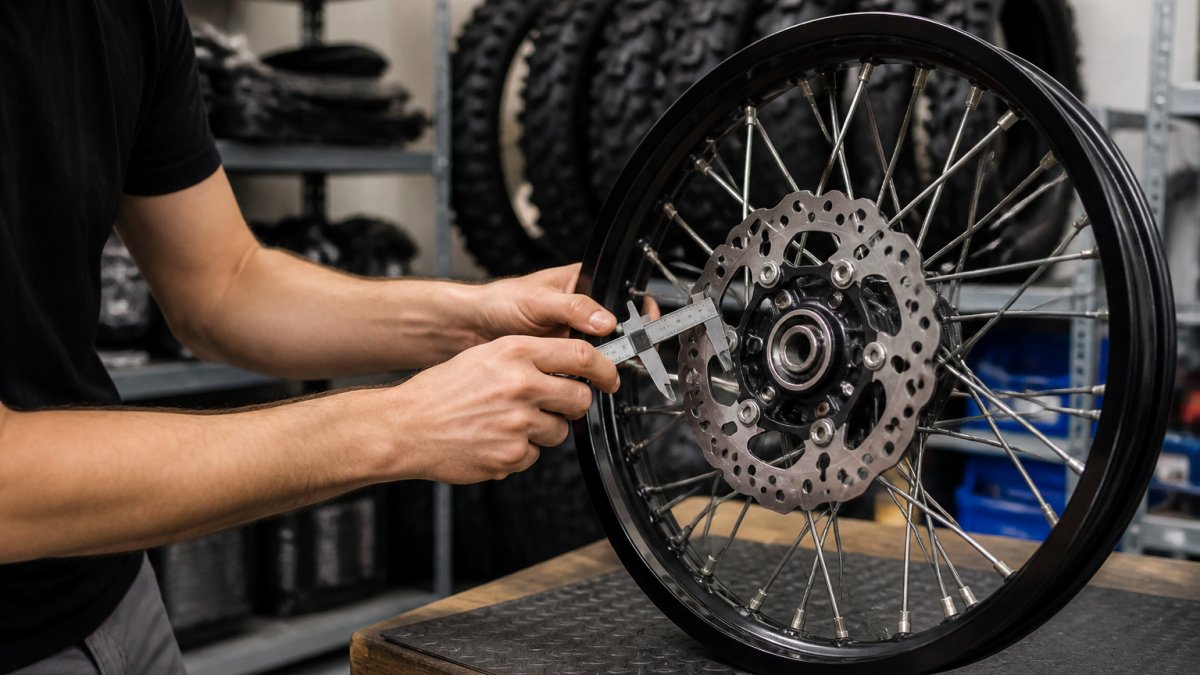
Table of Contents
- Why Custom Dirt Bike Wheels Take Longer Than In-Stock Parts
- Dirt Bike Wheel Build Time: The Stages Behind the Estimate
- Dirt Bike Wheel Fitment and Compatibility Checks That Add Days
- Warp 9 Wheel Lead Time: What to Expect From a Popular Brand
- What Can Delay a Custom Wheel Order
- Build Time vs. Shipping Time: Two Separate Clocks
- How to Check Custom Wheel Order Status and Get a Reliable Estimate
- Conclusion
- Frequently Asked Questions
Last Updated: October 17, 2026
Why Custom Dirt Bike Wheels Take Longer Than In-Stock Parts
Custom dirt bike wheel lead times run longer than in-stock orders because nothing is sitting on a shelf waiting for you. A custom wheel is built to your spec: your hub, your rim width, your offset. Riders plan entire builds around this reality, and the ones who understand the stages upfront are the ones who avoid surprises.
Here is what most guides get wrong: they quote one number and stop. In practice, a custom wheelset moves through a queue of separate steps, and any one of them can add days.
A wheel built to order is not a product you buy. It is a small manufacturing project.
Dirt Bike Wheel Build Time: The Stages Behind the Estimate
Dirt bike wheel build time breaks down into a sequence of stages, not one block of waiting. Understanding each stage tells you where your order actually sits and roughly how many days it contributes to the total.
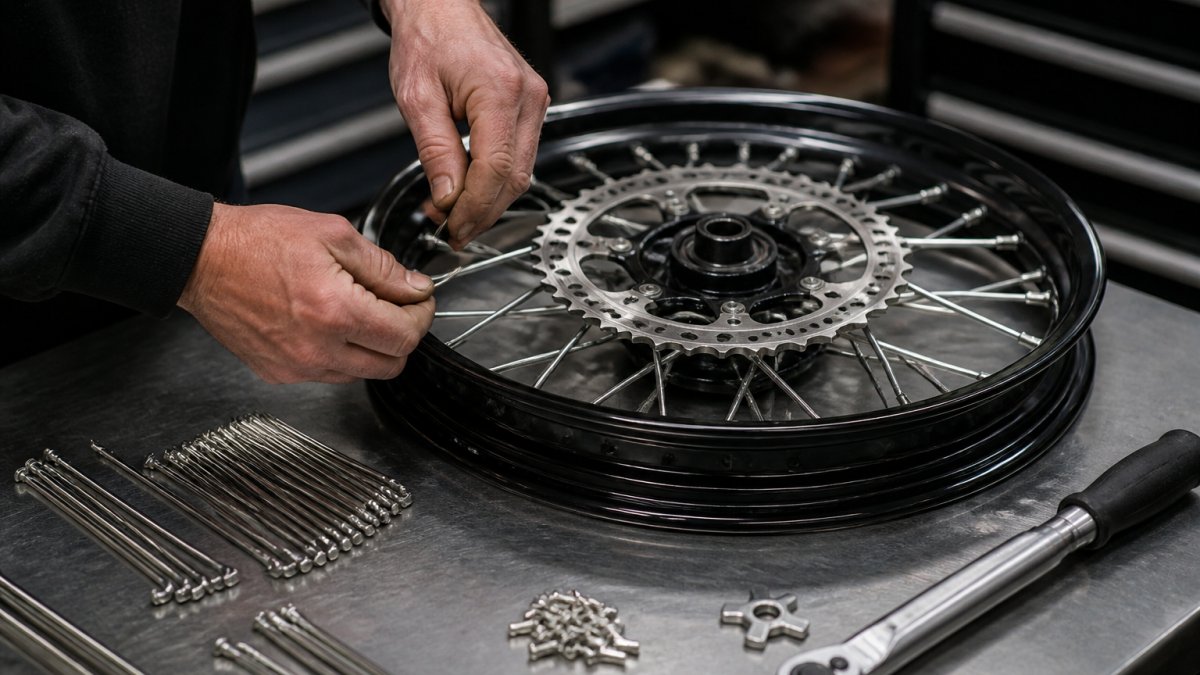
The stages look like this, with typical working-day ranges for a standard dirt bike wheelset:
- Order review and spec confirmation (1-2 days). Your hub, rim, and spoke choices get checked against fitment before anything is pulled. If your axle spacing or brake rotor mounting needs clarification, this stage stretches.
- Parts pull and availability check (0-10+ days). If a hub or rim is on backorder, the clock pauses here. In-stock components move the same day; a backordered hub can add one to three weeks depending on the supplier.
- Lacing and assembly (1-2 days per wheel). Spokes get laced in the correct spoke order and pattern. A 32-spoke or 36-spoke wheel with a standard three-cross pattern is routine; unusual spoke counts or radial lacing take longer.
- Truing (1-2 days). The wheel is dialed in on a stand until it runs true. A wheel that needs repeated tension adjustments after lacing adds time here.
- Final inspection and packing (1 day). Torque checks, a last look, then boxing.
For a standard dirt bike wheelset with all parts in stock, the workshop stages typically total 4-7 working days. Add parts sourcing and queue time and a realistic build window is often 1-3 weeks. Custom specs, uncommon models, and peak-season volume push that toward the longer end.
A common mistake is assuming assembly starts the day you order. It usually starts the day your parts are confirmed in stock and your spec is locked. That is why the parts-pull stage, not the lacing stage, is the one that most often decides your total lead time.
Dirt Bike Wheel Fitment and Compatibility Checks That Add Days
Fitment and compatibility checks add days when your bike, hub, or intended use does not match a standard build. A 2008 KTM 500 excf conversion, for example, needs the hub and spacing confirmed before anything is laced.
This is where custom wheel order status often stalls, and it is not a delay you can blame on the builder. Wrong axle spacing or a mismatched hub means a wheel that will not bolt on. Catching it before assembly costs days. Catching it after costs a rebuild.
What most guides miss is that fitment is not just about bolt pattern. Rim width, offset, spoke count, and brake rotor mounting all factor in. If you are converting a dirt bike to supermoto, the front brake and rotor setup matters as much as the hub.
If you are unsure whether your model is covered, ask before ordering. A quick spec check beats a month of waiting on the wrong part.
Warp 9 Wheel Lead Time: What to Expect From a Popular Brand
Warp 9 wheel lead time follows the same pattern as any built-to-order wheelset: it depends on the model, the spec, and parts availability at the time you order. There is no single fixed number that applies to every Warp 9 order, but there are realistic ranges you can plan around.
For a common dirt bike fitment with standard components in stock, a Warp 9 wheelset typically moves through the workshop in about 1-2 weeks. Less common models, custom rim widths, or choosing multiple colors or custom color choices often land in the 2-4 week range once parts sourcing is included. If a specific hub or rim is on backorder, add one to three weeks depending on the supplier’s restock schedule.
What we can tell you is how to read the estimate. A quoted lead time is a production window, not a promise that your exact build ships on day one. Popular fitments tend to move faster because parts are more likely to be in stock. Less common models and custom specs take longer.
The practical move is to confirm three things before you commit:
- Whether your specific model and year are in the current build queue
- Whether the hub, rim, and spoke components you want are in stock or on backorder
- Whether the quoted number is a dispatch date or a delivery date
Those three answers tell you more than any generic lead-time figure. A builder who can give you a stage and a dispatch date is giving you a real estimate; one who quotes a single number without splitting build from shipping is guessing.
Time of year plays the biggest roll in build times. If it’s the peak riding season build time will take longer.
What Can Delay a Custom Wheel Order
Delays usually trace back to a short list of causes, and most of them are avoidable.
- Parts availability and backorder. A hub or rim that is out of stock pauses the whole build.
- Unclear or changed specs. Switching rim width or spoke color after ordering restarts part of the process.
- Fitment questions. If the builder needs to confirm your bike model or brake setup, assembly waits.
- Build queue volume. Peak season means more orders ahead of yours.
- Incomplete order details. Missing contact info or shipping address holds dispatch.
Build Time vs. Shipping Time: Two Separate Clocks
Build time and shipping time are two separate clocks, and mixing them up is why riders get frustrated. Build time is how long your wheel takes to be made. Shipping time is how long it takes to reach you after it leaves.
A wheel can be built on schedule and still arrive later than expected because of carrier transit. The reverse is also true: fast shipping cannot rescue a build that is waiting on a backordered hub.
When you get a delivery estimate, ask which clock it refers to. If a shop quotes one combined number, ask them to split it into production time and transit time. That single question separates serious builders from order-takers.
How to Check Custom Wheel Order Status and Get a Reliable Estimate
To get a reliable estimate, ask for the build stage your order is in and the expected dispatch date, not just a total lead time. A good builder can tell you whether your wheel is in the queue, in assembly, or in truing.
Use this checklist before you order:
- Confirm your exact model and year are supported
- Lock rim width, spoke color, hub, and offset
- Ask whether your components are in stock or on backorder
- Request the build-stage timeline and expected dispatch date
- Confirm the shipping method and transit estimate separately
- Save your order number and a contact for status updates
If a part is on backorder, we will tell you before you commit.
Conclusion
Planning a build around a custom wheelset comes down to one habit: separate the build clock from the shipping clock, and confirm your fitment before you pay. Riders who do both rarely get surprised.
If you want wheels built to your spec with straight answers on timing, Supermoto wheels and tires stocks motocross and supermoto wheels, conversion kits, and the components to match. We will tell you where your order stands.
Frequently Asked Questions
How long does it take to build custom dirt bike wheels?
Most custom dirt bike wheels are built to order, so plan on a lead time measured in weeks rather than days. Standard builds commonly fall in the one-to-three-week range, while fully bespoke setups with non-catalog hubs, finishes, or specialty rims can run longer. The exact figure depends on the shop’s build queue, parts availability, and how much fitment verification your bike needs. Always confirm the current estimate with the seller before you pay, and ask whether that number covers build only or build plus shipping.
What information should I have ready when ordering custom wheels?
Have your exact bike year, make, and model ready, plus axle diameters, brake rotor mounting pattern, and the rim and tire sizes you want. Tell the builder your riding style and terrain so they can recommend spoke gauge, hub material, and rim width. If you are converting a dirt bike for street use, note that too, since it affects hub and brake choices. Complete specs up front prevent fitment back-and-forth, which is one of the most common reasons a custom wheel order stalls.
How can I check the status of a custom wheel order?
Ask the seller how they communicate order status before you buy: email updates, a portal, or phone. Once ordered, request a written confirmation of the build queue position and expected ship date. If the date passes, contact them directly rather than waiting. A reputable shop will tell you whether your order is in the queue, in assembly, or held up by a backordered part. Keep your order number handy and follow up in writing so you have a record of what was promised.
Should I order custom dirt bike wheels before the riding season?
Yes. Build queues tighten ahead of peak riding season, and parts like specific rims or hubs can go on backorder when demand spikes. Ordering several weeks before you need the wheels gives you buffer for fitment questions, build time, and shipping. If you are planning a supermoto conversion or a track-day setup, start the conversation early and ask about current lead times. Waiting until the last minute often means paying for expedited shipping or missing your first ride.
Ready to build? Shop now at Supermoto wheels and tires and get a clear timeline before you commit.