Table of Contents
- Dirt Bike Parts Fitment Guide: Getting the Right Fit
- Aftermarket vs. OEM Dirt Bike Parts: What Riders Should Know
- Your Motocross Parts Buying Checklist for Online Orders
- How to Choose Dirt Bike Parts Without Getting Burned
- Frequently Asked Questions
Last Updated: October 9, 2026
Dirt Bike Parts Fitment Guide: Getting the Right Fit
Buying aftermarket motocross parts online starts with one question: will it bolt onto your bike? Match your machine’s exact year, model, and submodel against the seller’s compatibility data before you pay.
Year, make, model, and submodel all matter, a 2008 KTM 640 LC4 is not the same fitment as a 2007, and an SMC is not an SMR. Check the part number, not the photo, and measure axle diameter, rotor bolt pattern, and hub width before ordering.
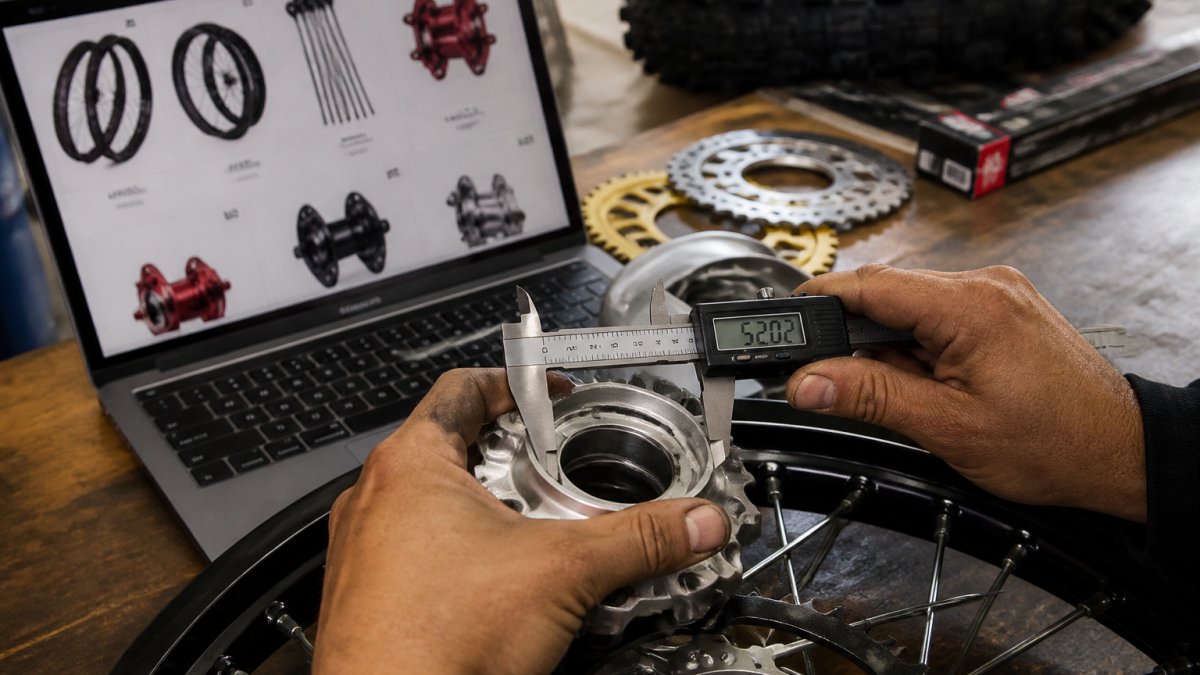
Compatibility lookup tools are a starting point, not a guarantee, older or less common models often fall through the cracks. Email us with your exact model and year when unsure. We use the parts we sell, so we know how they fit and work, and if something is not in our catalog we can usually source it or ship it in.
The most expensive mistake in online parts buying is ordering by photo. A wheel that looks identical can have a different hub width or rotor offset. Always confirm the part number against your model’s factory specification before checkout.
Aftermarket vs. OEM Dirt Bike Parts: What Riders Should Know
Neither option wins across the board. OEM parts are built to the factory specification your bike left the line with, making them the safe choice for safety or precise fitment. Aftermarket components exist because riders wanted what the factory did not offer: lighter wheels, stronger braking, better suspension, or a part that costs less than the dealer counter.
| Factor | OEM Parts | Aftermarket Parts |
|---|---|---|
| Fitment | Guaranteed factory fitment | Depends on brand and model-specific design |
| Cost | Usually higher | Often lower for equivalent wear items |
| Best for | Safety-critical replacement | Upgrades, wear items, custom builds |
A common mistake is treating “aftermarket” as one category. There is a wide gap between a reputable distributor that publishes specs and tests its products, and a no-name seller moving generic parts through a marketplace listing.
When you compare an aftermarket part to OEM, ask what it is made of and how. A seller who cannot name the alloy or process does not know their own product.
Your Motocross Parts Buying Checklist for Online Orders
Run through this checklist before every order, whether buying a single wear item or a full supermoto conversion kit.
Before you order:
- Confirm your exact year, make, model, and submodel
- Write down the OEM part number you are replacing
- Measure axle diameter, rotor bolt pattern, and hub width for wheels or brakes
- Check whether it is a direct replacement or an upgrade needing supporting changes
- Read the shipping and return policy
When you order:
- Save the order confirmation and lead time
- Note whether it is in stock or made to order
When it arrives:
- Test fit before you torque anything down
- Keep original packaging until you confirm fitment
The single most useful habit in online parts buying is asking the seller directly when your model is not listed. A good seller will tell you whether they stock it, can source it, or can ship it in.
How to Choose Dirt Bike Parts Without Getting Burned
Choosing dirt bike parts comes down to three questions: does it fit, is it made well, and can you get support if something goes wrong. Verify your model, look for published specs and material details, and remember that a seller who answers email before the sale is more likely to answer it after.
One thing most guides gloss over is lead time. If a part is made to order, the wait can run into weeks. Ask upfront what the realistic timeline is.
Do not plan a race weekend around a part with an unconfirmed ship date. If the seller cannot give a firm timeline, treat the part as unavailable for that event.
Frequently Asked Questions
How do I make sure aftermarket motocross parts fit my bike?
Always start with your bike’s exact year, make, and model. Use a compatibility lookup tool on the seller’s site, and check the part’s technical specifications against your factory service manual. Look for model-specific listings rather than universal fits. If you’re unsure, email the seller with your VIN and a photo of the stock part. A reputable shop will confirm fitment before you order, saving you the hassle of returns.
Are aftermarket dirt bike parts as good as OEM parts?
It depends on the part and the manufacturer. Some aftermarket components, like certain braking components or exhaust systems, can meet or exceed factory specifications for performance. However, quality varies widely. Look for brands that publish material quality details and offer a warranty. For critical engine internals, OEM replacement parts are often the safest choice unless a trusted aftermarket brand is known for that specific application.
What information do I need before ordering dirt bike parts online?
Gather your bike’s year, make, model, and any aftermarket modifications already installed. Have your VIN handy. Know the exact part name or number you need, and check if it’s a wear item that requires related hardware like gaskets or bolts. Also confirm the seller’s shipping speed and return policy. A motocross parts buying checklist can help you avoid missing these details before you click buy.