Table of Contents
- What Motorcycle Parts Warranty Coverage Actually Includes
- Motorcycle Parts Return Policy: Eligibility, Condition, and Packaging
- Motorcycle Parts Return Window: Deadlines and Timing Rules
- The Motorcycle Warranty Claim Process: A Step-by-Step Workflow
- How Installation and Modifications Affect Your Warranty
- Return Shipping, Restocking Fees, and Refund Timelines Compared
- What to Do When a Warranty or Return Claim Is Denied
- Frequently Asked Questions
Last Updated: October 16, 2026
What Motorcycle Parts Warranty Coverage Actually Includes
A motorcycle parts warranty is a manufacturer’s written promise to repair or replace a component that fails from a defect in materials or workmanship within a set period after purchase. It is not a store’s return policy, and confusing the two loses arguments riders should win.
Manufacturer Warranty vs. Retailer Return Policy
Manufacturer warranty covers defects in materials or workmanship for a defined term. Retailer return policy covers change-of-mind purchases, wrong-fit orders, and unopened goods within a short window.
A warranty claim produces a replacement or repair; a return produces a refund.
The manufacturer approves warranty claims; the retailer only processes returns. Knowing which door to knock on saves weeks.
The Federal Trade Commission’s guidance on written warranties explains what a written warranty must disclose, including its duration, what it covers, and what it excludes.
Warranty covers defects. Returns cover dissatisfaction and fitment errors. Filing under the wrong policy is the single most common reason claims get denied.
Fitment, Model-Year Compatibility, and Performance Parts
Fitment is where most warranty disputes begin. A part that doesn’t bolt up isn’t automatically defective, and one forced onto the wrong model year usually isn’t covered.
Manufacturers revise mounting points, axle diameters, and caliper spacing between generations, so a part listed for one year may not fit the next.
Performance parts like braking upgrades and racing wheel sets are often warranted against manufacturing defects only, not wear, crash damage, or misuse.
Motorcycle Parts Return Policy: Eligibility, Condition, and Packaging
Most motorcycle parts return policies require the part to be unused, in original condition, and in its original packaging with all hardware, brackets, and instructions.
Here’s the practical version of what usually qualifies:
- Unopened, uninstalled parts in original packaging with intact labels
- Wrong part shipped by the seller, regardless of packaging state
- Incorrect fitment where the listing’s fitment data was wrong, not your model lookup
And what usually doesn’t:
- Parts showing tool marks, thread damage, or crush washers already seated
- Electrical components that have been connected to a harness
- Special-order or custom-built items, which many sellers mark non-returnable
Proof of purchase matters: order number, receipt, and fulfillment date determine whether you’re inside the window. Keep the original invoice, not a bank statement screenshot.
USA.gov’s consumer complaint and refund guidance outlines how to escalate when a seller won’t honor a stated return policy.
Motorcycle Parts Return Window: Deadlines and Timing Rules
A motorcycle parts return window is the period after the fulfillment date during which a seller accepts returns. It usually runs from delivery, not the order date, and is often shorter for electrical and special-order parts.
Two deadlines usually apply at once, and they run on different clocks:
- The return window governs the retail transaction. It is set by the seller, measured from delivery, and typically short.
- The warranty term governs the defect claim. It is set by the manufacturer, measured from the purchase date, and typically far longer.
That difference in starting point is the most common source of missed deadlines: counting from the order date can burn a week of a 30-day window before the box arrives, while counting a warranty term from delivery can make a valid claim late.
How the Two Clocks Interact
| Event | Return Clock | Warranty Clock |
|---|---|---|
| Order placed | Not started | Starts on purchase date |
| Package delivered | Starts on delivery date | Already running |
| Return window closes | Retail remedy ends | Unaffected |
| Warranty term ends | Already closed | Defect remedy ends |
File a return the moment you know the part is wrong, and a warranty claim the moment you know it’s defective. Don’t wait for one clock to expire before trying the other.
What Usually Shortens the Window
Most sellers apply a standard window to general parts, then carve out exceptions:
- Electrical components, once connected to a harness, many sellers treat them as installed and non-returnable, regardless of the calendar.
- Special-order and custom-built items, often marked non-returnable at the point of sale, with no window at all.
- Clearance and closeout stock, frequently final sale.
What Usually Extends It
Seller error is the exception. If the wrong part shipped, the listing’s fitment data was wrong, or the item arrived damaged, most sellers accept the return outside the standard window because the fault is theirs. Document the discrepancy with photos before installing anything.
Filing a warranty claim after the return window has closed is normal and expected. Filing a return request after the window has closed and calling it a warranty claim is not, and it usually gets both requests denied.
Statutory Rights Can Override Store Terms
Store terms are not the final word. State consumer protection statutes and federal warranty law can extend or override a seller’s stated window in specific situations, for example, when a product is misrepresented, when a written warranty was breached, or when a seller’s own policy is unconscionable. The Federal Trade Commission’s guidance on written warranties explains what a written warranty must disclose.
| Situation | Likely Path | Timing Basis |
|---|---|---|
| Wrong part shipped | Return | Delivery date |
| Part doesn’t fit your model year | Return or fitment claim | Delivery date |
| Part failed after installation | Warranty claim | Purchase date |
| Damaged in transit | Return or shipping claim | Delivery date |
| Custom or special order | Usually non-returnable | Check listing terms |
| Seller misrepresented the part | Statutory claim | Varies by state |
The Motorcycle Warranty Claim Process: A Step-by-Step Workflow
The fastest warranty claims follow a documented sequence: confirm eligibility, gather evidence, submit through the correct channel, and follow up in writing. Skipping the evidence step turns a two-week resolution into a two-month one.
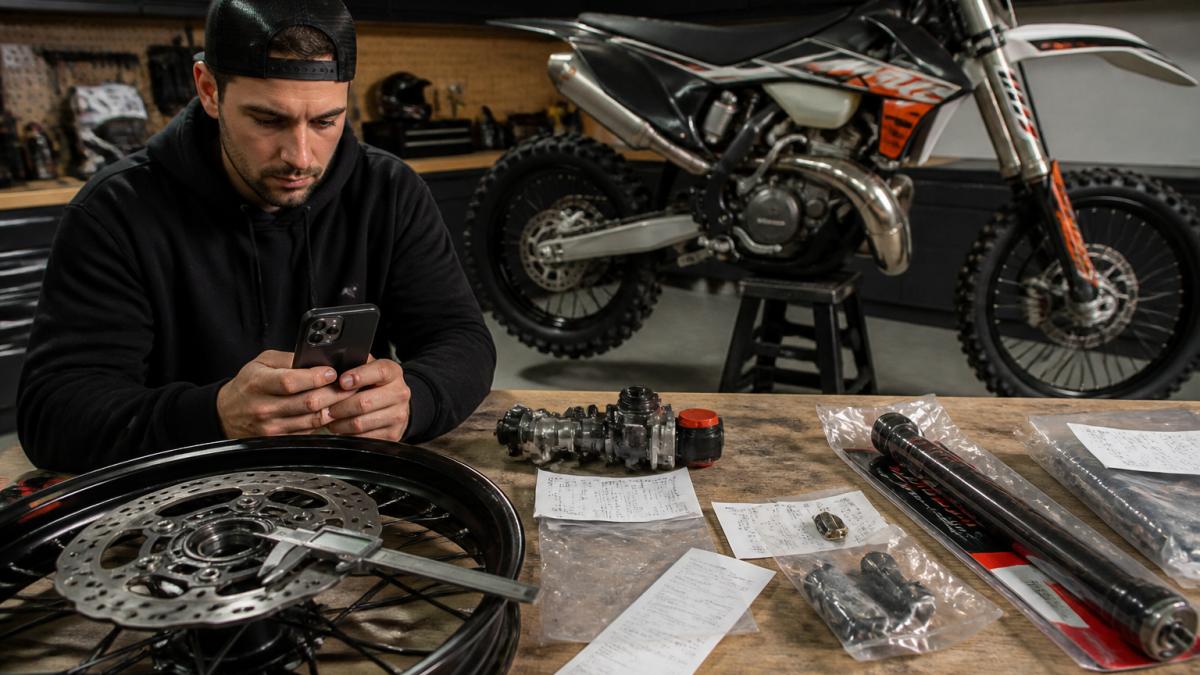
- Confirm the part is still under warranty. Check the purchase date against the stated term. Note whether the part is a performance component with a shorter coverage period.
- Stop using the part. Continued use after a failure can void coverage and create safety risk. Park the bike.
- Photograph everything before disassembly. Wide shots of the installed part, close-ups of the failure point, and a photo of the part number stamp.
- Request return authorization. Most manufacturers require an authorization number before any part ships back. Don’t send anything without one.
- Submit the claim with your evidence package. Include order number, receipt, photos, and a plain description of what happened and when.
- Keep the part until the claim closes. Sellers may request inspection, and discarded parts end claims immediately.
- Track the response in writing. Email beats phone calls because it creates a record of what was promised and when.
Evidence Checklist for Claims
- Order number and receipt showing the fulfillment date
- Photos of the failure point from two angles
- Photo of the part number or serial stamp
How Installation and Modifications Affect Your Warranty
DIY installation doesn’t automatically void a warranty, but installation errors aren’t covered defects.
Modifications shift the analysis further: machining a bracket, cutting a wiring harness, or pairing a component with an incompatible aftermarket system gives a manufacturer a clear basis to deny coverage for related failures.
This cuts both ways: a manufacturer can’t deny a claim for an unrelated defect just because you installed the part yourself.
Keep a simple installation log: date, torque values used, and any adapters or spacers fitted. If a claim is ever disputed, a dated log with real numbers is far more persuasive than a verbal account of what you remember doing.
Return Shipping, Restocking Fees, and Refund Timelines Compared
Who pays return shipping depends on why the part is coming back: seller error, wrong part shipped, or transit damage usually means the seller covers it, while change of mind means you do.
Return Shipping: Who Actually Pays
- Seller pays, wrong part shipped, damaged in transit, defective on arrival, or a listing whose fitment data was wrong.
- Buyer pays, change of mind, ordered the wrong part yourself, decided not to install, or found it cheaper elsewhere.
- Split or case-by-case, installed then removed, opened electrical components, or parts returned after a partial install.
When the seller pays, most issue a prepaid label or return authorization number. Don’t ship anything back without that number, an unauthorized return can be refused at the dock and shipped back at your expense.
How Restocking Fees Are Actually Calculated
A restocking fee is a percentage of the purchase price deducted from your refund when the seller must inspect, re-test, or re-package an item before resale. It appears most often on:
- Large or bulky items that are expensive to re-shelve
- Special-order and custom-built parts the seller cannot resell as new
- Electrical components that require testing before they can be listed again
The fee is normally disclosed in the return policy before purchase, so check the listing page rather than assuming. If it isn’t disclosed before the sale, that omission is itself a point to raise in a dispute.
Refund Timelines: The Four Stages
A refund is a sequence, and the inspection stage is almost always the longest:
- Transit, the returned part travels back to the seller or warehouse.
- Receiving and inspection, the seller confirms the part matches what was sent and is in the condition described. This is where most of the wait lives.
- Approval and processing, the refund is authorized and queued with the payment processor.
- Posting, the credit appears on your statement. Card issuers typically add their own posting delay on top of the seller’s processing time.
Refunds to the original payment method are standard, though some sellers offer store credit as a faster option. If speed matters more, ask about credit, but confirm in writing that accepting it doesn’t waive your right to a cash refund if the seller later disputes the return.
Estimating the Real Cost Before You Buy
Before ordering a part you’re unsure about, run the worst-case math:
- Return shipping, if you pay it
- Restocking fee, if the item is special-order or bulky
- The time value of waiting through inspection and posting
If the total downside approaches the price of the part, it’s usually cheaper to confirm fitment first, check the part number against your model year, measure the mounting points, and ask the seller directly, than to order and return.
| Return Reason | Who Pays Shipping | Restocking Fee | Refund Method |
|---|---|---|---|
| Wrong part shipped | Seller | None | Original payment method |
| Damaged in transit | Seller | None | Original payment method or replacement |
| Change of mind, unopened | Buyer | Sometimes | Original payment method |
| Special order or custom build | Buyer | Often applies | Original payment method or credit |
| Installed then removed | Case by case | Often applies | Subject to inspection |
| Electrical component, connected | Buyer | Often applies | Subject to inspection |
Photograph the part, the packaging, and the shipping label before you send anything back. If the seller later claims the item arrived damaged or incomplete, dated photos are the fastest way to close the dispute.
What to Do When a Warranty or Return Claim Is Denied
A denial isn’t always final. Most cite one of four reasons: outside the window, evidence of installation damage, missing proof of purchase, or an excluded part.
If the denial cites the window, check whether the seller measured from the order date instead of the fulfillment date, a common, correctable error.
When a seller won’t budge, escalation paths exist.
At Supermoto wheels and tires, we stock the parts we sell, which means fitment questions get answered by people who can look at the shelf rather than a supplier portal.
Parts fail, orders arrive wrong, and fitment surprises happen even when you’ve checked the listing twice.
Frequently Asked Questions
What does a motorcycle parts warranty usually cover?
A motorcycle parts warranty typically covers manufacturing defects in materials or workmanship under normal use. That includes premature failures like a wheel hub cracking or a brake caliper leaking. It does not cover wear items such as brake pads, tires, or chains, nor damage from crashes, improper installation, or modifications. Coverage varies by manufacturer and part type, so read the specific warranty terms before you buy.
How long do motorcycle parts warranties last?
Warranty periods for motorcycle parts commonly run from 30 days to one year, depending on the manufacturer and the component. High-end performance parts may carry longer coverage, while consumables often have none. The warranty clock usually starts on the purchase date or the fulfillment date, not the installation date. Keep your receipt and order number so you can prove when the clock started.
Can I return a motorcycle part after installing it?
Most motorcycle parts return policies require parts to be in original condition, unused, and in original packaging. Once you install a part, it is generally no longer returnable for a refund. If the part is defective, that becomes a warranty claim rather than a return. Inspect and test-fit parts before installation, and contact the seller immediately if something looks wrong.
What information do I need to make a motorcycle warranty claim?
You will need proof of purchase (receipt or order number), the part number and serial if applicable, photos or video of the defect, and a description of how the part failed. Some manufacturers also ask for installation details and the bike’s make, model, and model year. Keep the original packaging until you are sure the part works. Missing documentation is the most common reason claims get delayed or denied.
Are aftermarket motorcycle parts covered by a warranty?
Many aftermarket motorcycle parts carry their own manufacturer warranty, separate from any warranty on the bike itself. Coverage depends on the brand and part. Some aftermarket parts come with a limited warranty against defects, while others are sold as-is. Always check the part’s warranty terms before purchase, and keep your receipt. Installing aftermarket parts can also affect your bike’s factory warranty if the part causes a related failure.
What is the difference between a return policy and a warranty?
A return policy lets you send back an unused part within a set window for a refund or exchange, usually for any reason. A warranty covers defects after purchase, often after the return window closes and sometimes after installation. Returns focus on condition and timing; warranties focus on whether the part failed due to a manufacturing defect. Understanding both helps you pick the right path when something goes wrong.