Table of Contents
- Start With How You Actually Ride
- Soft vs Hard Motorcycle Tire Compounds Explained
- Supermoto Tire Warm-Up Time on Cold Mornings
- Best Supermoto Tires for Street Riding: What to Look For
- Supermoto Tire Grip and Tread Life: The Real Trade-Off
- How to Choose Supermoto Tire Compounds for Street Riding
- Common Mistakes When Choosing Supermoto Tire Compounds
- Frequently Asked Questions
Last Updated: October 12, 2026
Start With How You Actually Ride
Supermoto tire compounds are the rubber mixes that decide how your bike grips, turns, and stops on pavement. Choosing the right one starts with an honest look at your riding, not a spec sheet.
So ask yourself three questions:
- Do you ride mostly city streets and backroads, or do you hit track days?
- Is your climate hot and dry, or cool and wet?
- Do you care more about grip or getting maximum mileage?
Your answers point straight to a compound. There’s no single best choice for everyone.
Soft vs Hard Motorcycle Tire Compounds Explained
Soft compounds use sticky rubber that heats up fast and grips hard. Hard compounds use denser rubber that lasts longer but grips less. That’s the trade-off in one sentence, but the part that actually decides your purchase is how each compound behaves as pavement temperature, moisture, and pressure change.
Tire compound is the specific rubber blend a manufacturer uses to balance grip, heat, and wear. Softer blends put more rubber on the road and reach operating temperature with less input. Harder blends resist wear but need more heat before they bite, which is why they can feel vague on a cool morning.
Here’s how the three families compare on the street:
| Compound | Grip Level | Warm-Up Speed | Tread Life | Best For |
|---|---|---|---|---|
| Soft | Highest | Fast | Shortest | Track days, aggressive street, cool mornings |
| Medium | Balanced | Moderate | Moderate | Mixed street riding, variable weather |
| Hard | Lowest | Slow | Longest | Commuting, touring, steady highway miles |
How Temperature and Conditions Change the Choice
Compound behavior is not fixed, it shifts with the world around it. A few patterns most riders learn the hard way:
- Warm, dry pavement. All three compounds work, so the choice narrows to how hard you ride. Soft rubber rewards aggressive cornering; hard rubber feels wooden.
- Cool pavement (roughly below 60°F). Hard compounds can take several miles to reach useful grip. Soft compounds get there sooner, which is a real safety edge on a cold commute.
- Wet or damp roads. Grip depends more on tread pattern and water clearing than on compound hardness. A soft tire with a worn tread pattern is worse in the rain than a fresh medium.
- Mixed surfaces. Supermoto bikes often see dirt or gravel connectors. A dual-sport or adventure-oriented compound trades peak pavement grip for durability on loose surfaces.
If you ride in one climate most of the year, pick the compound that matches it. If you ride year-round in a place with real seasons, a medium compound is the safer default, and a soft front paired with a medium rear is a common street compromise.
What the Compound Label Actually Tells You
The label tells you the rubber’s intended use, not a magic number. A “soft” or “sticky” tag means the maker built it for maximum grip. A “touring” or “sport-touring” tag means it favors mileage.
Read the sidewall for:
- The compound name or code
- The intended use (sport, touring, dual-sport)
- The load and speed rating
Most riders skip this. Don’t. It’s the fastest way to know what you’re buying, and it’s the only way to compare two tires that both claim to be “sport” rubber.
Sticky compounds are the safer choice for most street riders. They reach grip sooner, stop shorter, and turn harder when a driver pulls out in front of you. You only have two tires, pick the ones that do what you need, not the ones that last the longest.
Supermoto Tire Warm-Up Time on Cold Mornings
Cold tires grip far less than warm ones, so your first few miles matter most. Soft compounds warm up faster than hard ones, which is a real safety edge on a chilly morning.
Give any tire a gentle warm-up. Here’s a simple routine:
- Ride easy for the first few minutes
- Avoid hard braking and sharp lean angles
- Build speed and cornering gradually
- Check pressure before you ride, not after
On cold pavement, a hard tire can feel like ice until it builds heat. A soft tire gets there sooner. For most street riders, that faster warm-up is worth more than extra mileage.
Best Supermoto Tires for Street Riding: What to Look For
The best supermoto tires for street riding balance grip, warm-up, and wear for the way you actually ride. If you want safety and performance, lean toward a stickier compound.
Look for these traits:
- A soft or medium compound for strong grip
- A tread pattern that clears water on wet roads
- A profile that turns in quickly and holds a line
- Correct size and load rating for your bike
Safety comes first. You only have two tires, and they’re the only thing touching the road. Grip helps you stop and turn to avoid other drivers. That matters more than squeezing out extra miles.
Sizes and Fitment That Keep You on the Road
Fitment means the tire matches your wheel and clears the swingarm and forks. Get it wrong and the tire rubs, handles poorly, or won’t seat.
Common supermoto sizes include:
- Front: 120/70-17
- Rear: 150/60-17 or 160/60-17
Check your manual or current setup before ordering. If you’ve done a conversion, confirm your wheel size first. Motorcycle tire load and speed ratings explained can help you read the sidewall codes correctly.
Supermoto Tire Grip and Tread Life: The Real Trade-Off
You can’t max out grip and mileage at the same time. Soft rubber grips hard but wears fast. Hard rubber lasts long but grips less. Every compound sits somewhere on that line, but the line is not the same for every rider, and the smart move is to understand how each compound wears before you commit.
How Each Compound Actually Wears
Wear is not uniform across the tire. On a supermoto, the shoulders take the load in corners and the center takes it under braking and acceleration. That shapes how each compound ages:
- Soft compounds wear fastest at the shoulders and can cup if pressure is off. They also heat-cycle faster, meaning grip fades gradually as the rubber hardens with age, not just as tread disappears.
- Medium compounds wear more evenly and hold their grip longer into the tire’s life. This is why they’re the default for riders who want one tire to do everything.
- Hard compounds last the longest in the center, which suits commuting and highway miles. But they can still wear quickly at the shoulders if you ride aggressively, so “long life” is not guaranteed if your riding style is hard.
A common pattern is that a soft tire used gently outlasts a hard tire used hard. Compound choice is only half the story, riding style and pressure are the other half.
Cost Per Mile vs. Cost Per Stop
It’s tempting to buy the longest-lasting tire and call it value. But cost per mile is not the same as cost per stop. A tire that lasts twice as long but slides when you need to brake hard is not cheaper, it’s a liability.
Tires that wear fast perform better. They put more rubber on the road, which means shorter stops and tighter turns. When a driver pulls out in front of you, grip is what saves you.
So think about cost per mile, but don’t let it drive the choice. A cheaper tire that lasts longer can cost more in the end if it slides when you need it most.
Pressure, Heat, and Wear: The Setup That Protects Both
Pressure is the single biggest lever you have over how a compound wears and how it grips. Too low and the tire squirms, overheats, and wears unevenly. Too high and the contact patch shrinks, grip drops, and the center wears faster than the shoulders.
Start with the bike maker’s recommended pressure, then adjust for load and feel. Check pressure cold, before you ride, not after, when heat has raised the reading. A few pounds off can make a soft compound feel greasy and wear out early.
Running a hard, high-mileage tire to save money can backfire. It grips less when cold, so your stopping distance grows exactly when you need it short. Grip is a safety feature, not a luxury.
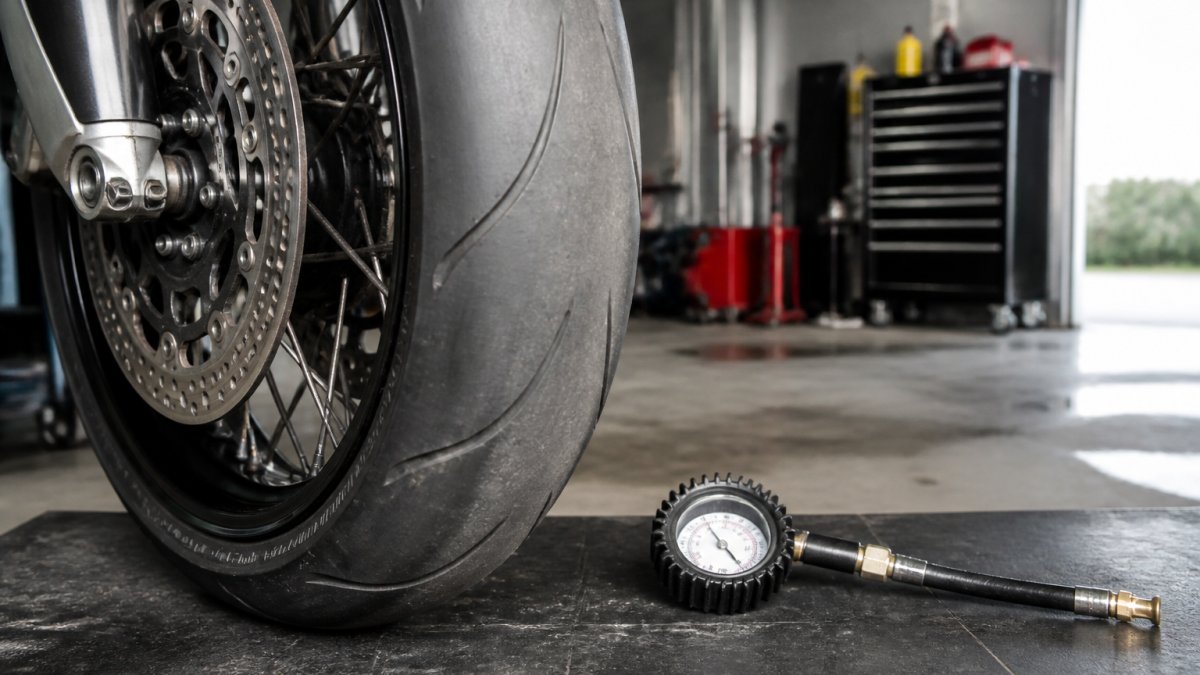
Keep a small pressure gauge in your garage and check tires before every ride. It’s the cheapest handling upgrade you’ll ever make, and it’s the fastest way to get full life out of whatever compound you choose.
How to Choose Supermoto Tire Compounds for Street Riding
Match the compound to your riding, then confirm the size and pressure. That’s the framework. Here’s how to choose supermoto tire compounds for street riding, step by step.
- Set your priority. Grip and safety first, or mileage first?
- Check your climate. Hot and dry favors soft; cool and wet needs grip and water clearing.
- Pick your compound. Soft for aggressive riding, medium for balance, hard for commuting.
- Confirm the size. Match front and rear to your wheels and clearances.
- Set your pressure. Start with the bike maker’s spec and adjust for feel.
- Warm up every ride. Easy miles first, always.
If you ride mixed conditions, a medium compound is a solid middle ground. If you ride hard and want maximum safety, go soft.
Common Mistakes When Choosing Supermoto Tire Compounds
The biggest mistake is buying for mileage when you ride for fun. Riders chase long life, then complain the bike feels vague and slides in corners.
Other common errors:
- Ignoring warm-up on cold mornings
- Running the wrong pressure for the load
- Mixing a soft front with a hard rear and upsetting the balance
- Skipping fitment checks after a conversion
Fix these and your bike will feel sharper and safer in the same afternoon.
Keep a small pressure gauge in your garage and check tires before every ride. A few pounds off can make a soft compound feel greasy and wear unevenly. It’s the cheapest handling upgrade you’ll ever make.
Choosing supermoto tire compounds for street riding comes down to one honest question: do you want maximum grip or maximum mileage? You only have two tires, and they’re the only thing between you and the road. That’s why we recommend sticky, high-performance rubber over long-wear options. Moto X Industries provides a comprehensive selection of high-performance parts and accessories for supermoto and motocross bikes. We specialize in conversion kits, wheels, and essential components designed to enhance your racing and riding experience. Whether you are upgrading your dirt bike or building a supermoto, our extensive inventory ensures you have the quality gear needed to perform at your best. If you want tires and wheels that grip when it counts, shop now and get the right setup for your bike.
Frequently Asked Questions
Are sticky supermoto tires safer on the street?
Yes. Sticky compounds grip better under braking and cornering, which matters most when traffic forces an unexpected stop. The trade-off is faster wear, but grip is the one thing you cannot add back once you are mid-corner. A tire that holds the road is worth more than one that lasts twice as long, and you only have two tires between you and the pavement.
Do softer motorcycle tire compounds wear out faster?
They do, and that is the point. Soft compounds put more rubber in contact with the road, which raises grip and lets the tire reach operating temperature sooner. You will replace them more often, but each mile delivers more traction and shorter stopping distances. Riders who prioritize mileage over grip often trade away the safety margin they actually need in traffic.
How long does supermoto tire warm-up time take in cold weather?
Cold tires offer reduced grip until friction raises their operating temperature. On a cold morning, plan on several miles of gentle braking and progressive lean before you push pace. Soft compounds warm faster than hard ones, which is one reason they suit street riding. Check your tire pressure before you ride, since underinflation adds heat and changes how quickly the tire comes up to temperature.
Can I run racing supermoto tires on the street?
Racing slicks and full race compounds are built for a warm track and consistent surface, so they can feel unpredictable on cold or wet roads. A street-focused soft or medium compound gives you most of the grip with better behavior in traffic. If you ride mixed surfaces, look at dual-sport or adventure options instead. Check manufacturer guidance for street use before buying.