Table of Contents
- Fitment First: How to Verify Aftermarket Parts Actually Fit
- Aftermarket vs OEM Dirt Bike Parts: What You Gain and Give Up
- Best Dirt Bike Performance Upgrades for Motocross and Off-Road
- Is a Stainless Steel Brake Line Worth It for Dirt Bike Performance?
- Performance vs Durability: Choosing Parts That Last a Full Season
- How to Spot Counterfeit Aftermarket Dirt Bike Parts Before You Buy
- Installation Difficulty Ratings: Which Upgrades Can You Do Yourself?
- Frequently Asked Questions
Last Updated: September 25, 2026
Fitment First: How to Verify Aftermarket Parts Actually Fit
Fitment is the single biggest reason aftermarket orders get returned, and it is entirely avoidable. Before you spend a dollar on upgrades, confirm the part number, model year, and sub-model match your bike exactly.
Reading Part Numbers and Fitment Charts
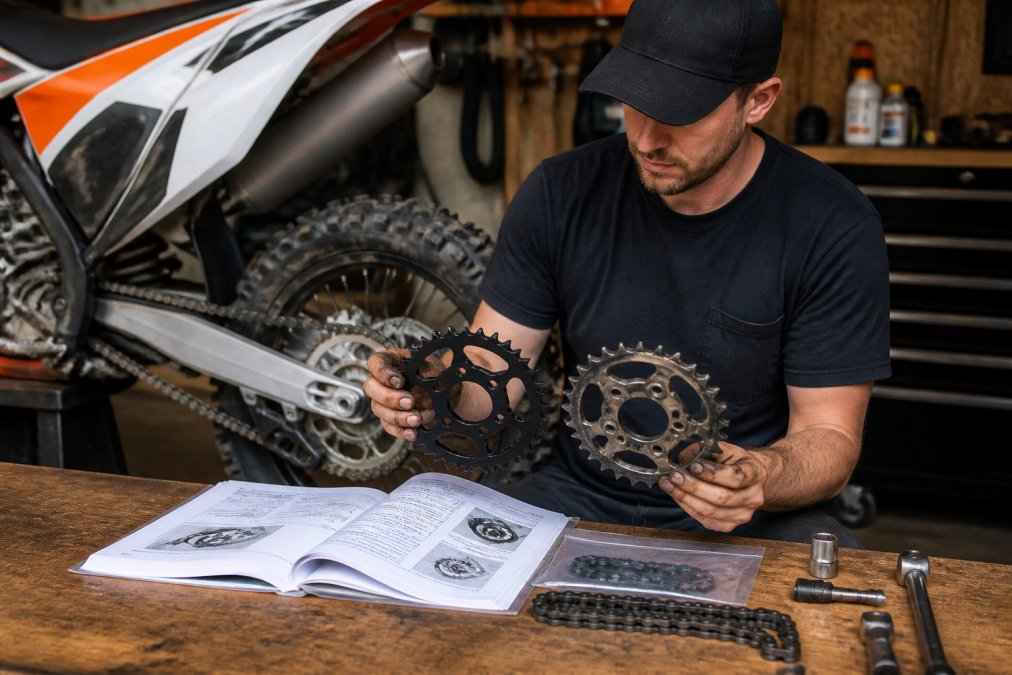
Part numbers encode the critical details: model family, year range, and variant. Read them left to right and confirm each segment against your bike’s documentation. Fitment charts from reputable sellers list exact year and model combinations, not approximations. If a chart says “2019-2023,” verify your specific year falls inside that window and that your sub-model is listed separately.
When to Call the Shop Instead of Guessing
Call when your bike is an older model, a gray-market import, or a build that mixes parts from multiple years. A two-minute conversation beats a month of return shipping. Ask the seller to confirm fitment in writing before you order, especially for custom components with long lead times.
Aftermarket vs OEM Dirt Bike Parts: What You Gain and Give Up
Aftermarket dirt bike parts typically cost less, ship faster, and offer performance options OEM never built. OEM parts guarantee factory fitment and warranty coverage, but they limit you to stock specifications. The trade-off is real, and it depends on what you’re building.
Cost, Availability, and Warranty Differences
OEM parts come with manufacturer warranty and guaranteed compatibility. Aftermarket parts vary wildly: some brands match OEM quality, others cut corners on materials. Availability favors aftermarket for discontinued models, where OEM stock dries up entirely.
| Factor | OEM Parts | Aftermarket Parts |
|---|---|---|
| Fitment guarantee | Exact factory match | Depends on seller verification |
| Warranty | Manufacturer-backed | Varies by brand |
| Availability | Limited for older bikes | Broad, including discontinued models |
| Performance options | Stock spec only | Wide range of upgrades |
| Cost | Higher | Lower to comparable |
Component-by-Component: Where Each Side Wins
The OEM-vs-aftermarket call is not one decision, it’s a dozen small ones. Here’s how it breaks down for the parts you’ll actually replace.
- Pistons and top-end kits: OEM pistons are built for stock compression and long service life. Aftermarket forged pistons (JE, Wiseco, Vertex) tolerate higher compression and revs but require more frequent ring replacement and careful warm-up. For a stock trail bike, OEM or OEM-equivalent is the safer buy.
- Clutch plates and springs: OEM fibers last longer under casual use. Aftermarket clutch kits (Hinson, Rekluse) change engagement feel and heat capacity, worth it for racing, overkill for a weekend trail bike.
- Sprockets and chains: OEM sprockets are steel and heavy but last. Aftermarket aluminum sprockets cut rotating mass and sharpen throttle response but wear faster, especially in mud. A common pattern is aluminum rear plus steel front for a balance of weight and life.
- Brake pads: OEM pads are quiet and rotor-friendly. Aftermarket sintered pads bite harder and resist fade but wear rotors faster. Match the pad to the rotor material, not just the caliper.
- Suspension springs and valving: OEM springs are set for an average rider weight. Aftermarket springs (Race Tech, Factory Connection) let you match rate to your weight and terrain, one of the highest-value upgrades for any rider outside the stock weight range.
- Plastics and graphics: OEM plastics fit perfectly and match factory colors. Aftermarket plastics (Acerbis, UFO, Polisport) cost less and come in more colorways but occasionally need trimming at mounting tabs.
- Electrical and ignition: OEM CDI and stator units are the safe choice for reliability. Aftermarket ignition boxes add tunability but introduce a failure point if the mapping is wrong for your setup.
When OEM Actually Saves You Money
OEM is not always the expensive choice. On wear items where a failed aftermarket part can take out a more expensive assembly, a chain that snaps and cracks a case, a cheap piston that scores a cylinder, the OEM premium is cheap insurance. For a bike you plan to keep for years and ride hard, OEM or OEM-quality on internal engine and drivetrain parts usually pays back in avoided repairs.
Buy aftermarket where it adds adjustability or performance you’ll actually use (suspension, brakes, controls). Buy OEM or OEM-quality where a failure is expensive (internals, ignition, drivetrain). The category matters less than the specific part.
Verifying Fitment Before You Commit
Whichever side you choose, fitment is the gate. OEM parts fit because they were built for your VIN. Aftermarket parts fit only if the seller’s fitment data is correct. Before ordering, confirm the part number against your bike’s model year and sub-model, and check whether the listing distinguishes variants (for example, a motocross model versus its off-road sibling often share a displacement but not a frame or suspension spec).
Best Dirt Bike Performance Upgrades for Motocross and Off-Road
The best dirt bike performance upgrades improve power delivery, handling, and durability without compromising reliability. Prioritize suspension and braking before chasing engine power; a faster bike you can’t control is slower on lap times.
Engine, Exhaust, and Air Intake Components
Engine rebuild kits, piston kits, and clutch kits restore lost compression and torque. Exhaust systems and silencers change power delivery across the rev range. High-flow air filters and intake systems improve throttle response, but they demand more frequent cleaning in dusty conditions.
A few specifics worth knowing before you buy:
- Exhaust: A full system (header plus silencer) shifts the power curve more than a slip-on. A slip-on mainly changes sound and saves weight. Neither adds meaningful power without a matching fuel or jetting change.
- Air filter: Foam filters are the norm off-road because they hold oil and trap fine dust. A high-flow filter flows more air but passes more dirt if not oiled correctly, clean and re-oil every ride in dusty conditions.
- Jetting or remapping: Any intake or exhaust change alters the air-fuel ratio. On a carbureted bike, re-jet; on a fuel-injected bike, use a tuner or remap. Skipping this step is the most common cause of a lean-running, overheating engine after a bolt-on.
- Clutch: A heavier-duty clutch kit helps a modified engine put power down without slipping, but stiff springs fatigue your hand on long rides. Match spring rate to how much torque you’ve actually added.
Suspension, Brakes, and Drivetrain Upgrades
Suspension tuning, upgraded braking performance, and fresh sprockets and chains transform how a bike handles. Skid plates and handguards protect your investment on trail-ready builds. Wheel bearings and tire compounds round out the handling package.
- Suspension: Correct spring rate for your weight is the single highest-value change for most riders. Revalving adjusts how the fork and shock respond to terrain. Do springs first; valving second.
- Brakes: Stainless braided lines improve lever feel and consistency under heat. Sintered pads add bite. Fresh fluid and quality pads deliver most of the benefit for casual riders at lower cost.
- Drivetrain: A worn chain wears sprockets fast, and vice versa. Replace chain and sprockets as a set. Changing tooth counts changes gearing, one tooth on the front sprocket is roughly equivalent to three on the rear.
- Protection: Skid plates, handguards, and case savers don’t make you faster, but they prevent the damage that ends a season early.
Performance vs. Durability: The Trade-Off Nobody Explains
Performance parts and durable parts are not always the same thing, and the aftermarket rarely tells you which one you’re buying. Lightweight components often trade longevity for speed. Here’s how to choose based on how you actually ride:
- Race-only builds: prioritize weight savings and adjustability. Accept shorter service intervals and more frequent rebuilds.
- Trail and dual-sport: prioritize sealing, corrosion resistance, and long service intervals. A part that lasts three seasons beats one that’s faster for one.
- Mixed use: split the difference with OEM-quality replacements on wear items and aftermarket on adjustability (suspension, controls, brakes).
Chasing maximum power without upgrading cooling systems and fuel delivery is a common mistake. Lean running conditions from a new exhaust and intake can overheat a stock engine. Re-jet or remap before you ride hard.
A Practical Upgrade Order
If you’re starting from a stock bike and don’t know where to begin, this order works for most riders:
- Set suspension sag and spring rate for your weight. Cheapest handling gain available.
- Fresh tires and correct pressures for your terrain. Grip before power.
- Brake pads and fluid. Consistent stopping builds confidence.
- Chain and sprockets as a set. Restores crisp drive and prevents case damage.
- Air filter and jetting/remap. Only after the chassis is sorted.
- Exhaust and engine mods. Last, because they amplify everything above.
Is a Stainless Steel Brake Line Worth It for Dirt Bike Performance?
Yes, a stainless steel brake line is worth it for most riders who push their brakes hard. The braided construction resists expansion under pressure, so lever feel stays consistent when the system heats up. On long descents or track sessions, that consistency matters more than peak stopping power.
Performance vs Durability: Choosing Parts That Last a Full Season
Performance parts and durable parts are not always the same thing. Lightweight components often trade longevity for speed. The trick is matching the part to how you actually ride.
- Race-only builds: prioritize weight savings and adjustability
- Trail and dual-sport: prioritize sealing, corrosion resistance, and service intervals
- Mixed use: split the difference with OEM-quality replacements
Chasing maximum power without upgrading cooling systems and fuel delivery is a common mistake. Lean running conditions from a new exhaust and intake can overheat a stock engine. Re-jet or remap before you ride hard.
How to Spot Counterfeit Aftermarket Dirt Bike Parts Before You Buy
Counterfeit parts look convincing until they fail. Check the packaging for consistent branding, verify the seller’s return policy, and inspect machined surfaces for tooling marks. Genuine parts have clean finishes and accurate torque specs printed on the label or in an included service manual.
Installation Difficulty Ratings: Which Upgrades Can You Do Yourself?
| Upgrade | Difficulty | Typical Time | Tools Needed |
|---|---|---|---|
| Air filter | Easy | 10 min | None |
| Brake lines | Moderate | 45 min | Bleeder kit |
| Sprockets and chains | Moderate | 1 hour | Torque wrench |
| Suspension tuning | Advanced | 2-3 hours | Spring tools |
| Engine rebuild | Expert | Full weekend | Full kit |
Photograph every step as you disassemble. Reassembly goes twice as fast when you have a visual record of bolt locations and cable routing.
For riders building a supermoto conversion or hunting hard-to-find components, Moto X Industries provides a comprehensive selection of high-performance parts and accessories for supermoto, motocross, and electric bikes. We specialize in conversion kits, wheels, and essential components designed to enhance your racing and riding experience. Whether you are upgrading your dirt bike or building a supermoto, our extensive inventory ensures you have the quality gear needed to perform at your best. If your model isn’t listed, ask before assuming it’s unavailable.
Frequently Asked Questions
How do I ensure aftermarket parts are compatible with my specific bike model?
Start with your bike’s exact year, make, and model, then check the part number against the manufacturer’s fitment chart. Cross-reference the OEM part number the aftermarket piece replaces. Measure critical dimensions like axle diameter, bolt spacing, and rotor size before ordering. If a listing only says ‘fits most dirt bikes,’ treat that as a warning sign. When in doubt, contact the seller with your VIN or model code and ask them to confirm fitment in writing.
Are aftermarket dirt bike parts as reliable as OEM components?
It depends on the part and the manufacturer. Aftermarket brands focused on racing often exceed OEM durability for specific applications, while budget no-name parts can fail early. OEM parts guarantee factory fitment and consistent quality control. For wear items like sprockets, chains, and brake pads, quality aftermarket options frequently outperform stock. For critical engine internals, many riders stick with OEM or proven aftermarket brands with documented torque specs and service manuals.
Is a stainless steel brake line worth it for dirt bike performance?
For riders doing track days or aggressive off-road riding, yes. Stainless steel braided lines resist expansion under pressure, so brake lever feel stays consistent when the system heats up. Rubber lines flex and fade during repeated hard braking. The upgrade costs more than a stock replacement line, but the improved modulation and reduced fade are noticeable. For casual trail riding at low speeds, the difference is smaller and stock lines are adequate.
How can I verify the quality of aftermarket dirt bike parts before purchasing?
Look for documented material specs, torque ratings, and country of origin. Check customer reviews for fitment complaints and early failures, not just star ratings. Reputable sellers publish installation guides, warranty terms, and return policies. Ask whether the seller stocks inventory or drop-ships, because stocked parts ship faster and are easier to return. For wheels, brake components, and drivetrain parts, request the manufacturing tolerances if they are not listed.
What are the most common aftermarket upgrades for motocross bikes?
The most common upgrades are exhaust systems, air filters and intake kits, suspension revalving or spring swaps, brake pads and lines, sprockets and chains, handlebar grips, skid plates, and handguards. Engine-focused riders add piston kits, clutch kits, and carburetor jetting changes. Plastics and graphics are popular for appearance. Tire compounds and wheel bearings round out the list for riders chasing lap times or trail durability. Prioritize safety items like brakes before cosmetic changes.
How do I avoid counterfeit aftermarket dirt bike parts?
Buy from authorized dealers or established specialty shops, not marketplace listings with prices far below market. Check packaging for misspelled brand names, missing part numbers, and low-quality printing. Weigh the part if possible; counterfeits often use cheaper, heavier materials. Look up the serial or batch number with the manufacturer. For high-risk categories like brake components and drivetrain parts, a counterfeit can fail under load, so pay the small premium for a verified source.
Aftermarket upgrades can transform a dirt bike, but only when the parts actually fit and hold up under real riding conditions. Supermoto wheels and tires carries conversion kits, motocross racing wheels, and components for supermoto, motocross, and electric bikes, so you can source the right parts without the guesswork. Get started with Supermoto wheels and tires and build a bike that performs every time you ride.