Table of Contents
- Why Riders Look for a Custom Moto Wheels Alternative
- Warp 9 Supermoto Wheels: The Bolt-On Alternative Riders Trust
- What a Supermoto Conversion Kit Actually Includes
- Aftermarket vs. OEM Wheels: Weight, Finish, and Durability
- Motorcycle Wheel Installation Service vs. DIY Wrenching
- Safety, DOT Compliance, and What to Ignore
- Conclusion
- Frequently Asked Questions
Last Updated: September 27, 2026
Why Riders Look for a Custom Moto Wheels Alternative
A custom moto wheels setup changes how a dirt bike feels more than almost any other upgrade, but the traditional route is slow, expensive, and often frustrating. Riders searching for a custom moto wheels alternative usually want the same performance without the months-long wait or the guesswork.
Riders searching for a custom moto wheels alternative usually want the same performance without the months-long wait or the guesswork.
The core problem isn’t quality. It’s fitment, lead time, and support. A wheel that doesn’t bolt on cleanly is worthless, no matter how good the billet aluminum looks on a bench.
So what separates a conversion that works from one that sits in the garage? Three things: hub compatibility, correct sizing, and someone who actually stands behind the install.
NHTSA motorcycle safety and equipment guidance reminds riders that wheel and brake components are safety-critical, which is exactly why fitment matters more than aesthetics.
Warp 9 Supermoto Wheels: The Bolt-On Alternative Riders Trust
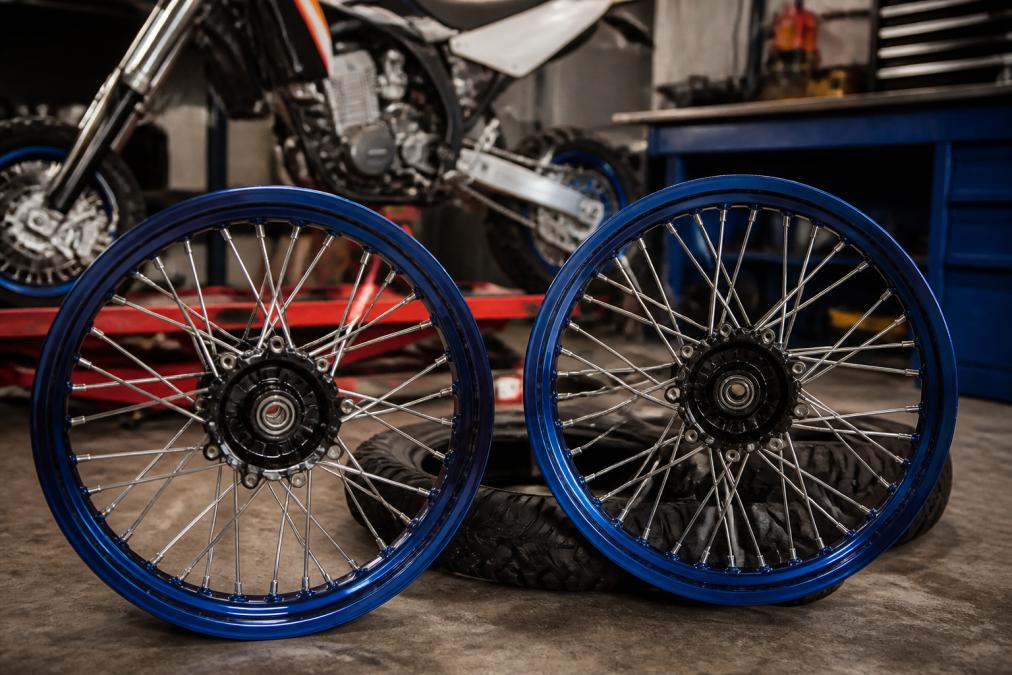
Warp 9 supermoto wheels are a common bolt-on answer for riders who want a proven fit without custom fabrication. They use billet aluminum hubs, come in standard axle diameters, and ship with the spacers and bearing kits most builds need.
This is where the alternative model wins. Instead of measuring, machining, and hoping, you order a set built for your platform and install it.
Billet Aluminum Hubs and Rotational Mass
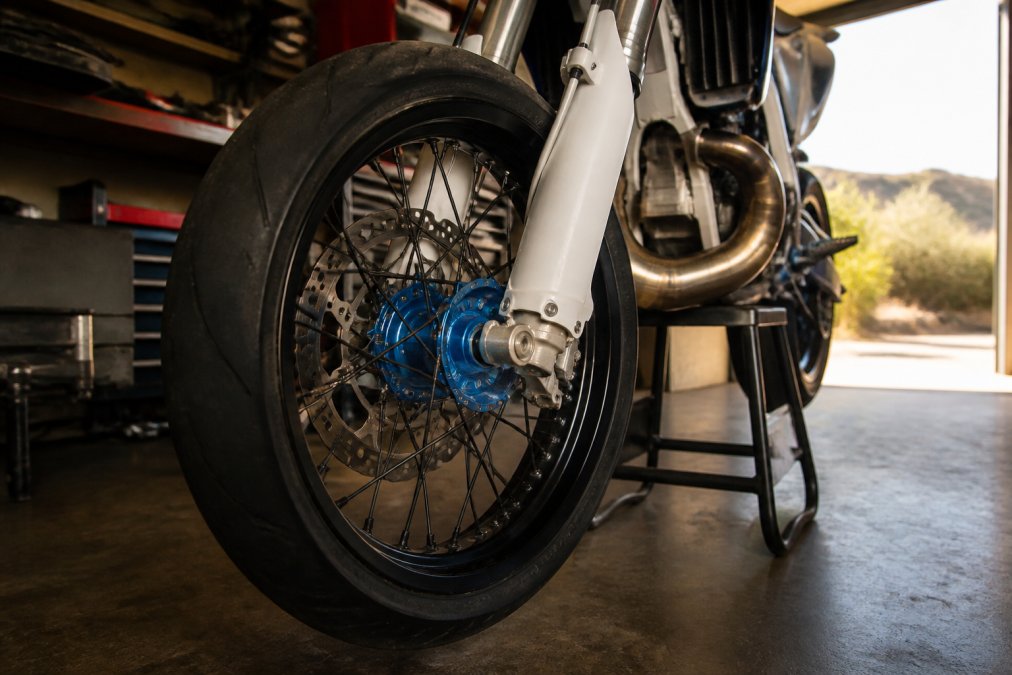
Billet aluminum hubs matter because of rotational mass. Less weight at the hub and rim means the suspension reacts faster and the bike changes direction with less effort.
Cast wheels are heavier and cheaper to produce. Billet hubs cost more but hold tolerances better and resist flex under hard braking. For track days and aggressive street riding, that difference shows up in feel.
Hub and Spacer Compatibility Guide
Hub compatibility is where most conversions go wrong. Before you buy anything, confirm these five specs:
- Axle diameter: front and rear, measured, not assumed
- Rotor offset: the distance from hub face to rotor mounting surface
- Sprocket carrier width: critical on rear wheels
- Spacer stack length: total width between fork legs and swingarm
- Bearing bore size: matches your axle, not the donor bike
A common mistake is trusting a listing that says “fits most models.” It rarely does. Measure your bike, then match the numbers.
Skipping the spacer measurement is the single most common cause of a wheel that wobbles or binds. Get it wrong and you risk brake rotor alignment issues and uneven pad wear.
What a Supermoto Conversion Kit Actually Includes
A supermoto conversion kit typically bundles the wheels, tires, spacers, bearing kits, and often a larger front brake setup. What’s inside varies a lot between sellers, so read the contents list carefully.
The essentials you should expect:
- Front and rear wheels with correct hub spacing
- Tubeless or tube-type rims depending on your use
- Bearing kits and axle spacers
- A front brake upgrade, since supermoto braking loads are higher
- Sprocket and rotor hardware, or reuse of your stock parts
What most guides miss is that the brake side of the conversion matters as much as the wheels.
Hub and Spacer Measurement: The Step Nobody Walks You Through
This is the part of a conversion that decides whether the bike rides or sits. Before you order anything, pull your stock wheels and measure the following with calipers, not a tape measure:
- Axle diameter, front and rear. Metric dirt bikes commonly run a 20 mm front and 20 mm rear axle, but this varies by model and year. Measure the axle shaft itself at the bearing seat, not the nut.
- Rotor offset. With the wheel flat on a bench, measure from the hub mounting face to the rotor’s outer friction surface. This number determines whether your caliper will center on the rotor or drag.
- Sprocket carrier width. On the rear, measure the distance from the hub face to the sprocket mounting plane. A carrier that’s a few millimeters off throws the chain line out and chews sprockets.
- Spacer stack length. Measure the total width across the hub with both spacers installed. This is the number that has to match the gap between your fork legs or swingarm.
- Bearing bore and width. Match the bearing inner diameter to your axle and the outer diameter to the hub bore. Mixing bearing series is a common cause of a wheel that spins rough.
Wheel Sizing, Tire Fitment, and Swingarm Clearance
Tire fitment starts with rim width. A rim that’s too narrow pinches the tire and ruins the contact patch. Too wide and the sidewall won’t seat properly.
Measure five things before you buy: axle diameter, rotor offset, sprocket carrier width, spacer stack length, and bearing bore. Everything else in a conversion kit is replaceable. Those five numbers are not.
Aftermarket vs. OEM Wheels: Weight, Finish, and Durability
Aftermarket rims usually beat OEM wheels on weight and finish options. Stock cast wheels are built to a cost target; aftermarket sets are built for a purpose.
| Factor | OEM Wheels | Aftermarket Wheels |
|---|---|---|
| Weight | Heavier cast construction | Lighter, less unsprung weight |
| Finish | Basic powder coating | Anodized finish, powder coating, machined finish |
| Durability | Adequate for stock use | Better under racing loads |
| Fitment | Guaranteed for your model | Depends on correct hub and spacer specs |
| Cost | Included with the bike | Higher upfront, better performance |
Weight-to-Performance Ratio: Why Rotational Mass Matters More Than Static Weight
A pound saved at the rim is worth more than a pound saved anywhere else on the bike. That’s not a slogan; it’s physics. Rotational inertia scales with the square of the radius, so mass near the rim edge resists acceleration roughly twice as hard as the same mass near the hub.
What that means in practice:
- Acceleration. Every ounce of rim and tire weight has to be spun up before the bike moves. Lighter wheels free up horsepower that was going into spinning mass.
- Braking. The same inertia that resists acceleration also resists deceleration. Less rotational mass means the brake has less work to do before the tire starts gripping.
- Suspension response. Unsprung weight is everything the suspension has to control but doesn’t carry. Lighter wheels let the fork and shock react faster over chop and square-edge bumps.
- Turn-in. Gyroscopic force from a spinning wheel resists lean. A lighter wheel changes direction with less rider input.
Weigh your stock wheels with tires mounted, then weigh the replacement set the same way. Comparing bare rims to bare rims hides the tire weight difference, which is often the bigger variable.
Long-Term Durability: What Survives 5,000 Miles
A wheel that survives one track day isn’t proven. The durability story plays out over a full season of hard use, and it separates good alternatives from cheap ones.
What to watch over time:
- Spoke tension. Spoked wheels lose tension as they break in. Check tension after the first few rides, then every few hundred miles. Cheap spokes stretch and won’t hold torque.
- Bearing wear. Bearings are a wear item. Rough spinning, play at the axle, or a grinding feel means replacement. Sealed bearings last longer in wet or dusty conditions.
- Rim trueness. A rim that develops a wobble or hop after a few thousand miles is telling you the alloy is soft or the spoke bed is flexing.
- Finish wear. Anodizing fades and scratches; powder coat chips. Neither affects safety, but both affect resale.
- Crack inspection. Look at the spoke holes and the rim seam. Hairline cracks there are a stop-riding signal, not a maintenance item.
A wheel that wobbles, hops, or shows cracks at the spoke holes is unsafe at any speed. Pull it from service and have it inspected before the next ride.
The weight advantage of aftermarket wheels is real and measurable, but it only pays off if the wheel holds up. Buy for durability first, weight second, finish third.
Motorcycle Wheel Installation Service vs. DIY Wrenching
A motorcycle wheel installation service handles mounting, balancing, spacer fitting, and brake alignment for you. DIY saves labor but demands the right tools and patience.
Safety, DOT Compliance, and What to Ignore
DOT compliance applies to the tires, not the wheels themselves. If you’re riding on public roads, your tires need to meet federal standards, and the NHTSA tire safety standards spell out what that means.
Conclusion
The hardest part of a wheel upgrade isn’t choosing a finish. It’s getting a set that bolts on cleanly, ships when promised, and comes with support when something doesn’t line up.
Frequently Asked Questions
Are Warp 9 wheels good for supermoto conversions?
Warp 9 supermoto wheels are a solid choice for conversions because they come in model-specific fitments with billet aluminum hubs, bearing kits, and matched spacers. They accept tubeless tires on sealed rims and work with most popular dirt bike platforms. The main thing to confirm is axle diameter, brake rotor alignment, and sprocket carrier offset for your exact year and model before ordering.
How do I choose the right supermoto conversion kit for my dirt bike?
Start with your bike’s year, make, and model, then confirm axle diameter, swingarm clearance, and brake caliper position. A complete supermoto conversion kit should include wheels, spacers, bearings, and a rotor that matches your caliper. If you are unsure, call a shop that builds bikes rather than just lists parts, since they can verify fitment before you pay.
Do I need a motorcycle wheel installation service for new supermoto wheels?
You can install supermoto wheels yourself if you have a torque wrench, axle stands, and basic hand tools. The tricky parts are brake rotor alignment, spacer placement, and spoke tension checks on new wheels. A motorcycle wheel installation service is worth it if you want the offset, rotor, and chain alignment verified by someone who builds these bikes regularly.
Is it better to buy custom wheels or pre-built supermoto kits?
Pre-built kits are faster and usually cheaper because the fitment work is already done. Custom wheels let you pick rim width, offset, and finish, but lead times can run several weeks. For most riders converting a dirt bike for street or track use, a pre-built kit from a shop that also installs wheels is the safer path.