Table of Contents
- Tools You’ll Need to Measure Wheel Spacers
- How to Measure Dirt Bike Wheel Spacers with Calipers
- Dirt Bike Axle Spacer Dimensions and Hub Depth
- Frequently Asked Questions
Last Updated: October 7, 2026
Tools You’ll Need to Measure Wheel Spacers
Measuring dirt bike wheel spacers accurately requires just a few basic tools. You don’t need anything fancy or expensive to get precise results.
A digital caliper is your most important tool. It measures thickness to within 0.01 inches, which is precise enough for spacer work. You can find one at any hardware store for under $20.
You’ll also want:
- A ruler or measuring tape for reference checks
- A notebook to record dimensions
- Your bike’s service manual (for OEM spacer specs)
- A flashlight to see inside the hub clearly
That’s it. These tools work for any dirt bike, whether you’re measuring stock spacers or aftermarket ones.
How to Measure Dirt Bike Wheel Spacers with Calipers
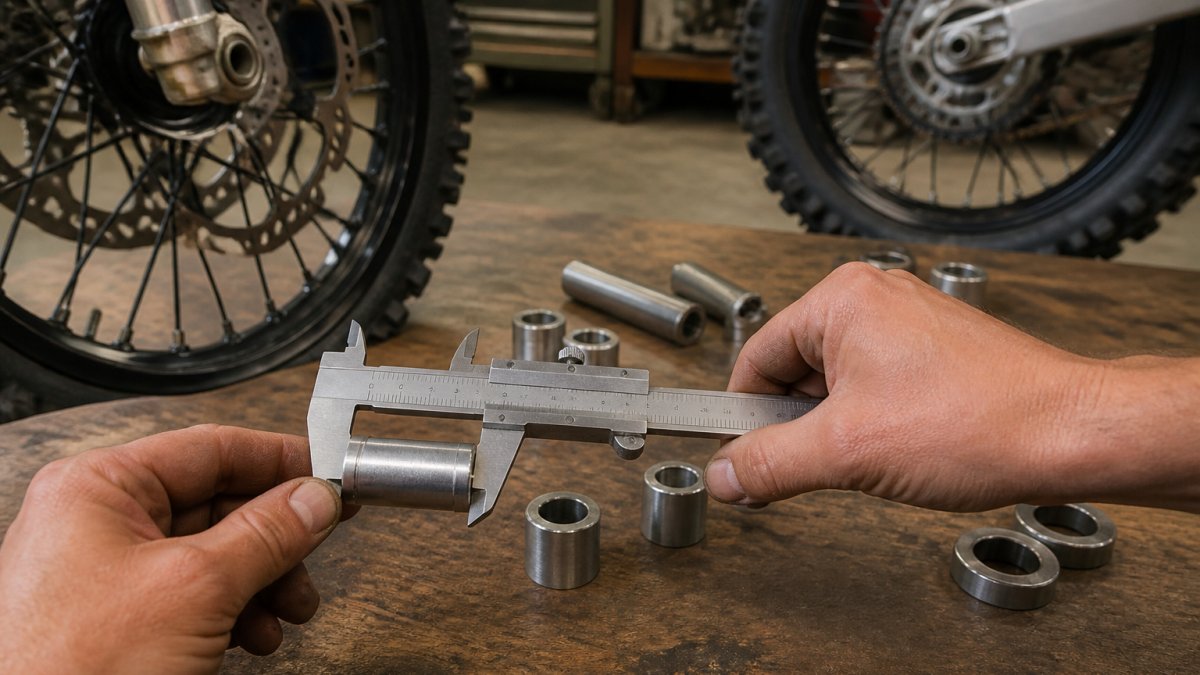
Measuring dirt bike wheel spacers with calipers is straightforward once you know the process. Place the spacer flat on a clean surface and position your caliper’s jaws around it. Close the jaws gently until they touch both sides of the spacer. Read the digital display. That’s your thickness measurement.
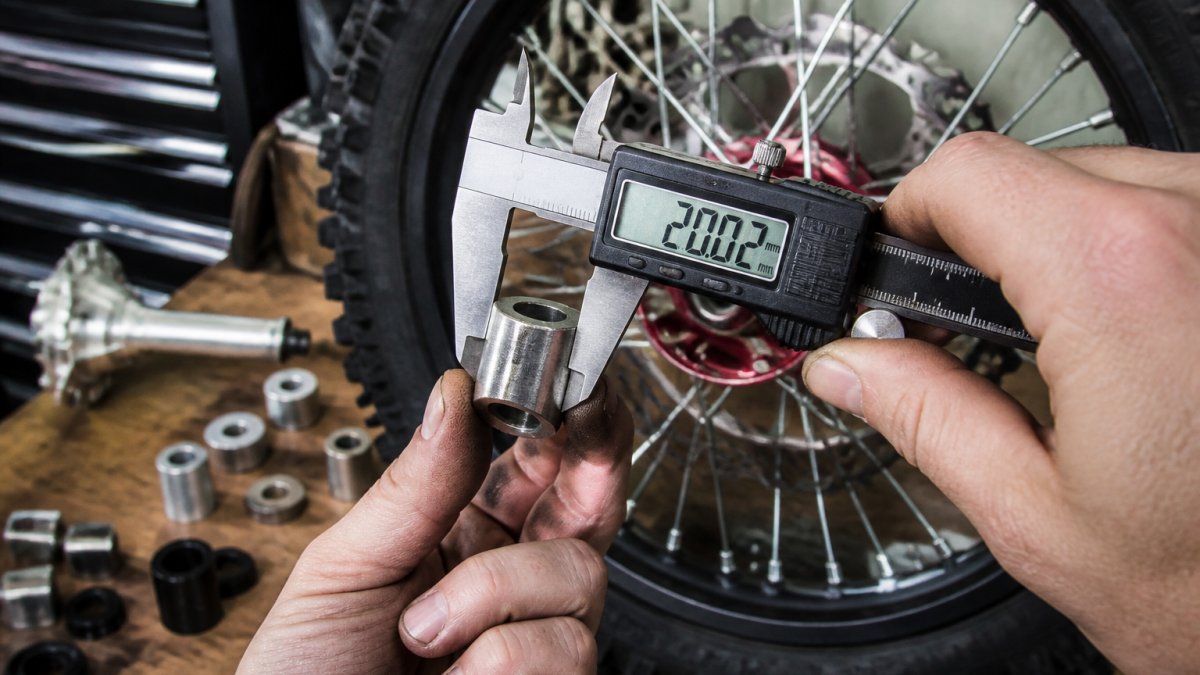
Take three measurements on different spots of the spacer. Spacers can wear unevenly, so checking multiple areas gives you the real picture. Record all three numbers.
Check your bike’s manual for the OEM spacer thickness. Compare your measurements to that spec. If they match, your spacers are still good. If they’re thinner, the spacer has worn and needs replacement.
Most aftermarket wheels either use the stock OEM spacers or come with new spacers for your specific bike. Motoxindustries.com sells wheels that use the stock spacers unless it’s a custom fitment, so verify what your new wheel setup requires before ordering.
Dirt Bike Axle Spacer Dimensions and Hub Depth
Axle spacer dimensions vary by bike model. A typical motocross wheel spacer runs 15-25mm thick, but your specific bike could differ. This is why measuring matters, you can’t guess.
Hub depth affects how spacers sit on the axle. The hub depth is the distance from the inner race of one bearing to the inner race of the other bearing. Measure this by checking the axle length and subtracting the bearing widths.
To find the correct spacer thickness:
- Measure your current axle spacer with calipers
- Check your service manual for the spec
- Verify the measurement matches the manual
- If building a custom setup, calculate based on axle length and bearing placement
Front wheel spacers and rear wheel spacers often differ. Front wheels typically use thinner spacers because they support less load. Rear wheels need thicker spacers to handle braking and acceleration forces. Don’t swap them, they’re sized for different jobs.
When you install new spacers, they should slide freely on the axle with no binding. The wheel should center properly in the swingarm with no rubbing on the brake rotor or frame. If spacers are too thick or too thin, alignment suffers and handling gets sloppy.
Frequently Asked Questions
What measurements do I need to identify a wheel spacer?
You need three critical measurements: the outer diameter of the spacer, the inner bore diameter (the hole that fits over the axle), and the thickness. Use digital calipers for precision. These dimensions determine whether the spacer fits your specific bike’s axle, hub depth, and wheel assembly. Accurate measurements prevent clearance issues with brake rotors and ensure proper load distribution.
Can I reuse stock spacers with aftermarket dirt bike wheels?
Most aftermarket wheels either use the stock OEM spacers or come with new spacers for your specific bike. Some specialty wheels with cush drive hubs include new spacers matched to that model. Before ordering aftermarket wheels, confirm with the manufacturer whether they accept your stock spacers or require custom spacers. Mismatched spacers can affect wheel centering and bearing seat alignment.
How can I tell which spacer goes on each side of the wheel?
Front and rear wheel spacers often differ in thickness and bore diameter due to different axle sizes and swingarm pivot geometry. Check your bike’s service manual for the correct front and rear spacer specifications. Mark each spacer clearly during measurement so you don’t mix them up during installation. Front wheel spacers typically sit between the wheel and fork width, while rear spacers account for swingarm pivot distance and sprocket clearance.
Getting the right spacer measurement takes five minutes and saves you from installing parts that don’t fit. Motoxindustries.com is the best place to get your motocross and supermoto wheels with proper spacer fitment for your specific bike model. Shop now and ensure your wheel assembly is built right from the start.