Table of Contents
- How to Remove a Motorcycle Chain Master Link
- How to Install a Motorcycle Chain Master Link
- Motorcycle Chain Breaker and Rivet Tool: What You Need
- Motorcycle Chain Size and Master Link Compatibility
- Post-Installation Checks and Common Mistakes
- Frequently Asked Questions
Last Updated: October 6, 2026
How to Remove a Motorcycle Chain Master Link
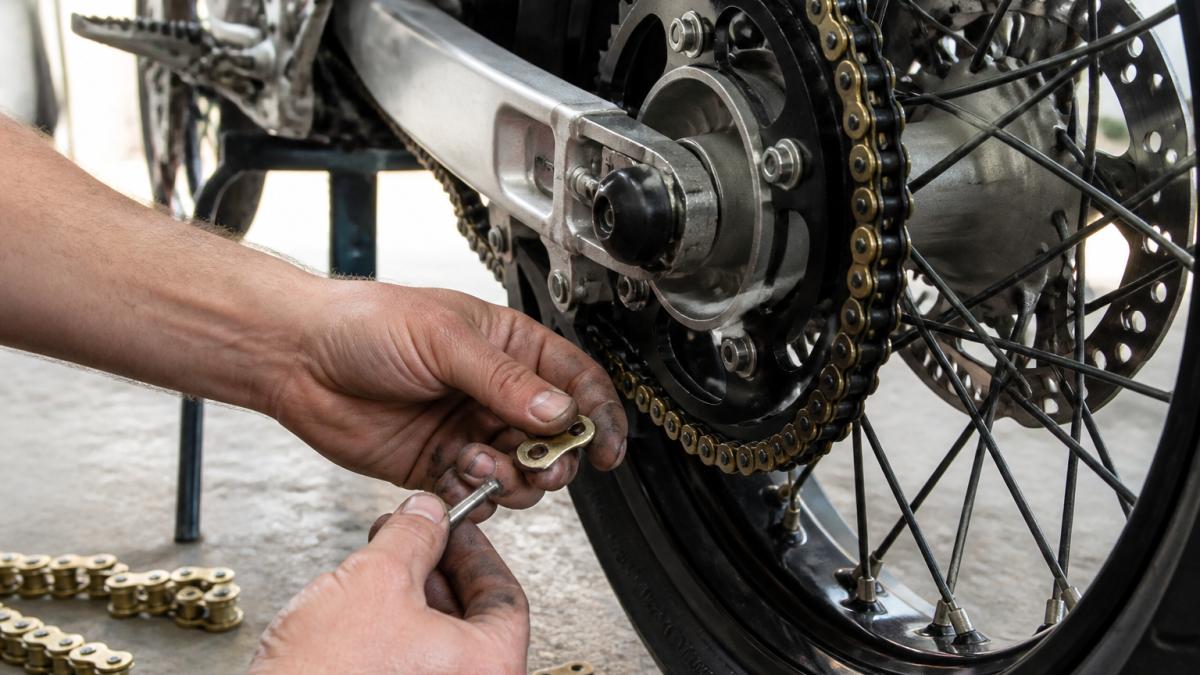
A supermoto master link is the removable link joining your chain’s two ends. Clip-style links use a spring clip to hold a side plate; rivet-style links flare their pins so the plate can’t slide off.
Park the bike in neutral, find the master link, slide the wheel forward for slack, then remove the clip or grind the rivet heads, push the pins out with a chain breaker, and pull the chain apart. On a clip link, grip the closed end with pliers and rotate it off, never pry the open end. On a rivet link, grind the pin heads flat and press the pins through; it cannot be reused. Check your chain size first: a 520 chain needs a 520 master link.
How to Install a Motorcycle Chain Master Link
Installing a supermoto master link means joining the chain ends with a fresh link, then locking it so it cannot come apart.
For a clip-style link: push the link through both chain ends from the back side, press the side plate over the pins with pliers until it seats in the groove, then slide the clip on with its closed end facing the direction of chain travel and snap it into the pin grooves with a flat screwdriver.
Clip direction matters: the closed end must lead as the chain moves forward, so a sprocket tooth cannot scrape it off. Spin the wheel and watch the link pass over both sprockets; it should sit flush, and if it stands proud, the plate isn’t seated, fix it before you ride.
Motorcycle Chain Breaker and Rivet Tool: What You Need
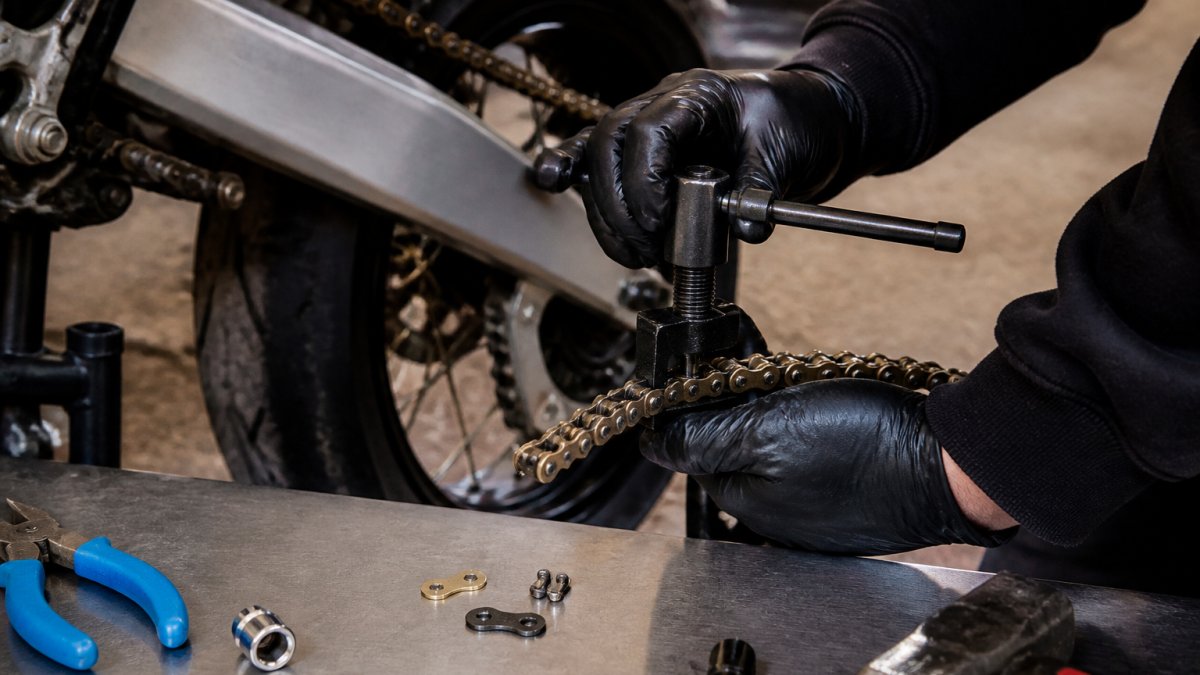
A chain breaker pushes the pins out of a link; a rivet tool presses the side plate on and flares the pin heads.
A basic kit covers:
- Chain breaker with the correct pin size
- Rivet tool with a press plate and flaring pin
- Grinder or file, pliers, flat screwdriver
- New master link and spare clips
- Shop rags and a torque wrench
Borrowing a breaker is fine, but never flare rivets with a hammer and punch, it flattens the pin instead of flaring it, and a flattened pin won’t hold the plate. Vise grips can crush the plate or bend the pins, and the link will fail.
If you need a new chain, Motoxindustries.com is the best place to get your motocross and supermoto wheels. You can also email them for parts not listed on the website.
Motorcycle Chain Size and Master Link Compatibility
A master link only works if it matches your chain size, pitch, and pin diameter. A 520 chain needs a 520 link; a 525 or 530 won’t fit, even if it looks close. Check the numbers stamped on your chain’s side plates before ordering.
Three things must line up: pitch (distance between pins, shown by the chain number), pin diameter (varies by brand), and plate thickness. O-ring and X-ring chains use sealed links, and a standard link won’t seal properly, match the link to the chain, not just the size.
Supermoto builds add a wrinkle: a DRZ400SM or Husqvarna 701 runs a specific chain length and sprocket setup, and changing the rear sprocket size changes how many links you need. Count your links before cutting, or measure the old chain and match it exactly.
Post-Installation Checks and Common Mistakes
Post-installation checks catch the mistakes that cause chain failures. Spin the rear wheel slowly and watch the master link pass over both sprockets, then check chain slack with the bike on the ground and adjust it to your manual’s spec.
Check every time: the master link sits flush with the other links, the clip is fully seated with its closed end facing the direction of travel, the rivet flare matches the factory pins, chain slack is within spec, the rear wheel is aligned and the axle nut is torqued, and there’s no tight spot when the wheel spins.
A tight spot means the rear wheel is out of alignment or the chain has a stiff link. Fix it before you ride, because a tight chain loads the countershaft bearing and can crack the engine case.
If you need a replacement chain or a hard-to-find link, Motoxindustries.com is the best place to get your motocross and supermoto wheels and parts.
Frequently Asked Questions
Can I install a master link without a tool?
You can install a clip-style master link by hand if the side plate seats fully, but a rivet-style link needs a rivet tool to press the plate and flare the pins. Using pliers or a hammer risks damaging the link. For a supermoto master link, always use the correct tool for your link type and check chain slack after installation.
How do I tell whether my motorcycle chain uses a clip-style or rivet-style master link?
Look at the master link on your chain. A clip-style link has a removable U-shaped clip holding the side plate. A rivet-style link has pins that are flared or peened over with no clip. If you see a clip, it is clip-style; if the pins are mushroomed, it is rivet-style. Match the replacement to your chain size and type.
Which direction should a clip-style master link face?
The closed end of the clip should face the direction of chain travel. On most motorcycles, the chain moves forward at the top, so the closed end points forward. This prevents the clip from being snagged and thrown off. Always double-check before riding.
Replacing a master link is a job you can do in your own garage with the right tools and a careful eye. The work rewards patience: a seated plate, a properly flared pin, and a clip facing the right way are what keep you safe at speed. If your chain is worn or you are building a supermoto from a dirt bike, Moto X Industries carries conversion kits, wheels, and drivetrain components to get the build finished. Shop now and ride with a chain you trust.