Table of Contents
- Quick Comparison: Top Supermoto Wheels for 2026 Track Days
- What to Look For in Track-Day Supermoto Wheels
- Haan Wheels Supermoto Sets: RK Excel Rim Durability
- Movetronix Signature: CNC-Machined Hubs for Modern Platforms
- Warp 9 Wheel Set Review: Built-to-Order Fitment and Warranty
- Choosing a Supermoto Conversion Kit for Your Chassis
- Supermoto Sprocket Sizing Guide for Track Gearing
- Frequently Asked Questions
Last Updated: September 27, 2026
Quick Comparison: Top Supermoto Wheels for 2026 Track Days
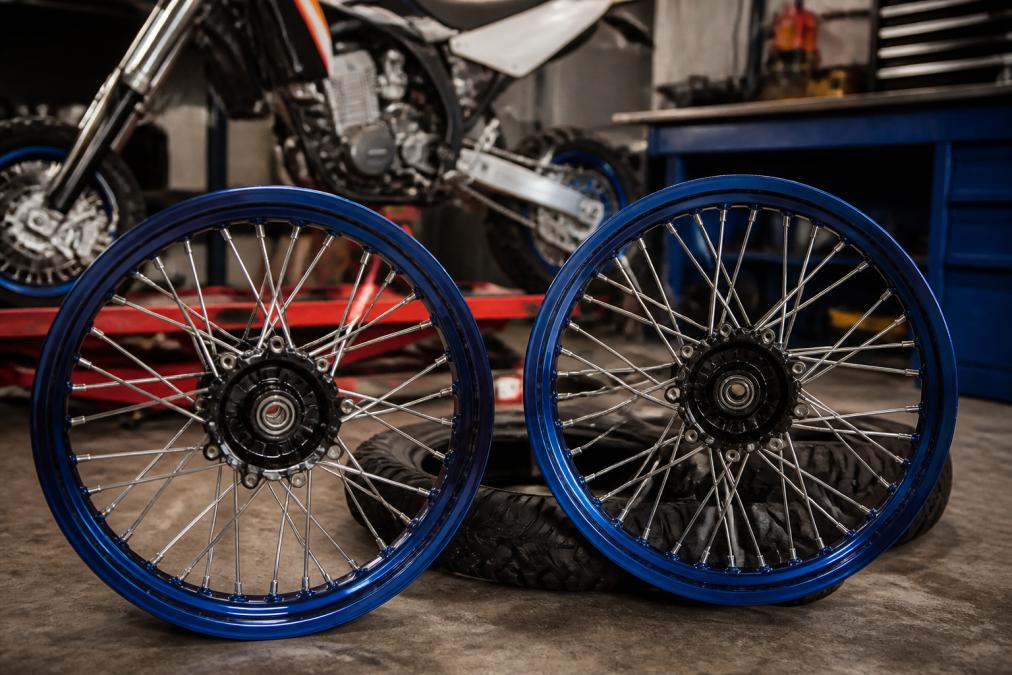
The top-rated aftermarket wheel sets for supermoto track days in 2026 come down to four names: Haan, Movetronix, and Warp 9. Each one solves a different problem, and picking wrong means either overspending or fighting fitment issues all season. This guide from Supermoto wheels and tires breaks down what actually matters: unsprung weight, rim width, hub quality, and whether the set bolts on without modification.
Here’s the short version before we get into details:
Wheel Set | Best For | Rim/Hub Highlights | Fitment |
|---|---|---|---|
Warp 9 (via Moto X Industries) | Built-to-order fitment, best value | Custom colors, tire and sprocket options | Bolt-on, stock-like fit |
Haan Wheels | Maximum durability, hard to find 17” | RK Excel rims, | Racing platforms |
Movetronix Signature | Modern platforms | 6061-T6 CNC hubs | Newer models |
What to Look For in Track-Day Supermoto Wheels
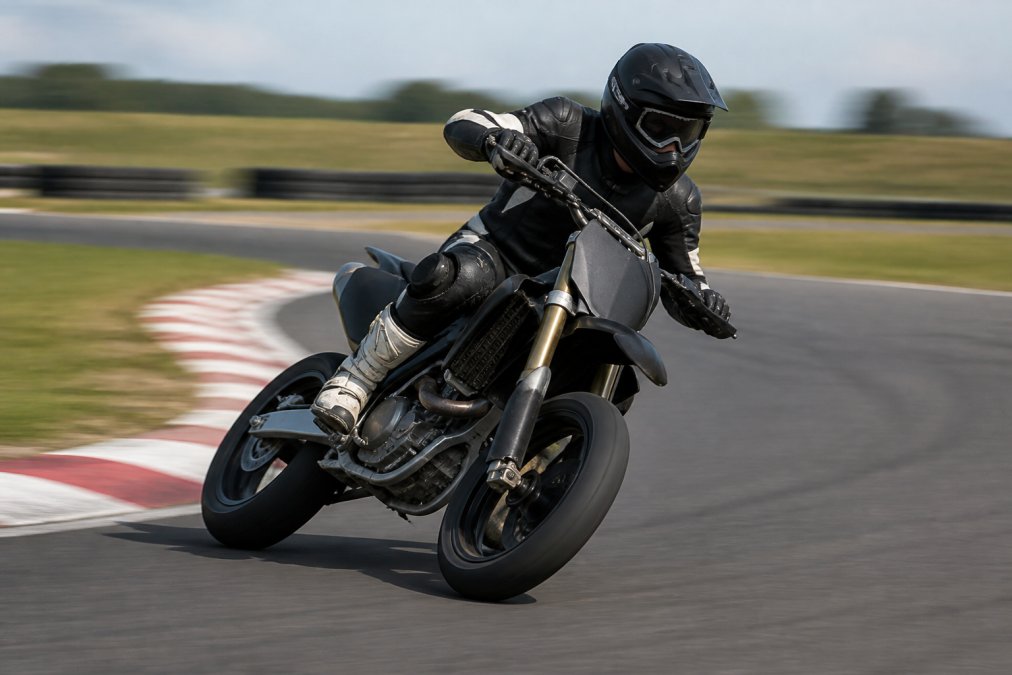
Track-day wheels are a system, not a single part. Unsprung weight, rim width, spoke tension, and hub design all interact, and changing one affects the others. Get the combination right and the bike turns in faster, holds a line better, and brakes later.
Wheel Size, Rim Width, and Tire Profile
Seventeen-inch wheels dominate track supermoto because tire choice opens up dramatically. A 3.5-inch front rim and a 4.25 to 5.0-inch rear rim pair well with common track tire sizes, and a lower aspect ratio sidewall keeps the contact patch flatter under lean angle. Sixteen-inch sets can work for tight layouts, but tire availability gets thin fast.
Hub Assembly, Spoke Tension, and Bolt-On Fitment
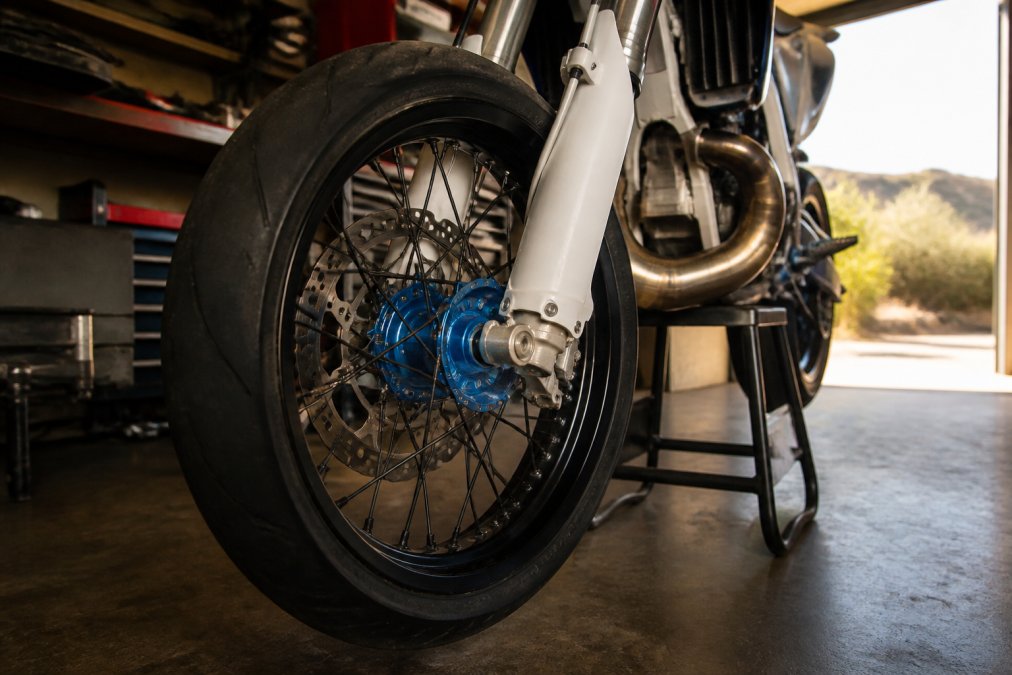
The hub is where cheap wheels give themselves away. Look for a machined hub assembly with quality bearing seals, a cush drive that absorbs drivetrain shock, and axle spacers cut for your specific chassis. Spoke tension matters too: hand-tensioned wheels hold true longer than machine-laced ones. Bolt-on fitment means no grinding, no shimming, no guessing.
Haan Wheels Supermoto Sets: RK Excel Rim Durability
Haan’s reputation rests on one thing: RK Excel rims. These are widely regarded as the strongest rim option available, and the optional Excel A60 build adds roughly 15% more strength for riders who case jumps or clip curbs. The hubs are precision-engineered for racing, and spoke tension holds up under repeated heat cycles.
Movetronix Signature: CNC-Machined Hubs for Modern Platforms
Movetronix builds its Signature line around aircraft-grade 6061-T6 CNC machined hubs, and that material choice shows in how the wheel behaves under load. Billet aluminum hubs resist flex better than cast equivalents, which translates to more predictable cornering stability and cleaner brake rotor alignment. Customizable finishes let you match the build to the bike.
Warp 9 Wheel Set Review: Built-to-Order Fitment and Warranty
Warp 9 wheels, sold through Moto X Industries, are the set we recommend most often, and the reason is simple: they’re built to order using the actual parts for your bike. That means when the wheels arrive, they fit like stock. No modifications, no adapter plates, no surprises the night before a track day.
Choosing a Supermoto Conversion Kit for Your Chassis
A supermoto conversion kit is the package of wheels, brake components, and fitment hardware that turns a dirt bike into a track-capable machine. The kit matters as much as the wheels, because brake rotor and caliper fitment determines whether you can actually stop the thing, and because a kit that is “close” is a kit that eats your Thursday night before a Saturday track day.
Measure these five things before you order
Every fitment failure traces back to one of these dimensions. Write them down in millimeters and keep the list next to your laptop while you shop.
- Axle diameter. Full-size dirt bikes typically run a 20 mm front axle and a 20 or 25 mm rear, while minis and lightweight electric platforms use smaller diameters. A wheel built for the wrong axle cannot be shimmed into safety.
- Axle spacer stack length. Measure from the fork leg face to the hub face on both sides. Spacers are model-specific, not universal, and a 2 mm error shows up as a dragging rotor or a wheel that will not center.
- Brake rotor bolt pattern and offset. Count the bolts, measure the bolt circle, and note the rotor offset. A rotor that bolts up but sits 3 mm off-center will drag the caliper and heat-soak the pads within a session.
- Caliper clearance at full compression. Bottom the fork with the wheel installed and check the gap between the caliper and the spokes. Spoke-to-caliper contact under hard braking is a common failure on oversized rotor conversions.
- Swingarm width and chain line. The rear wheel must center the chain run, not just fit between the arms. A chain line off by a few millimeters accelerates sprocket and chain wear and can throw the chain under load.
What a complete kit should include
A track-ready kit is more than two wheels. Expect the following in the box, or budget for them separately:
- Front and rear wheels with bearings and seals installed
- Model-specific axle spacers, front and rear
- Brake rotor(s) sized for your caliper, or a rotor adapter if the kit reuses your stock rotor
- Rear sprocket matched to your track gearing
- A cush drive or a rigid hub.
The suspension and insurance angle most guides skip
Suspension re-tuning. Swapping wheels changes unsprung mass and, in many cases, rotating inertia. A wheel set that is meaningfully lighter than stock will make the fork and shock feel over-damped at the same clicker settings. Most practitioners find that a few clicks of rebound and compression adjustment restores the balance, and riders chasing lap times often send the fork and shock out for a re-valve once the new wheels are on. Plan the suspension work into the same off-season window as the wheel install.
A quick fitment sanity check
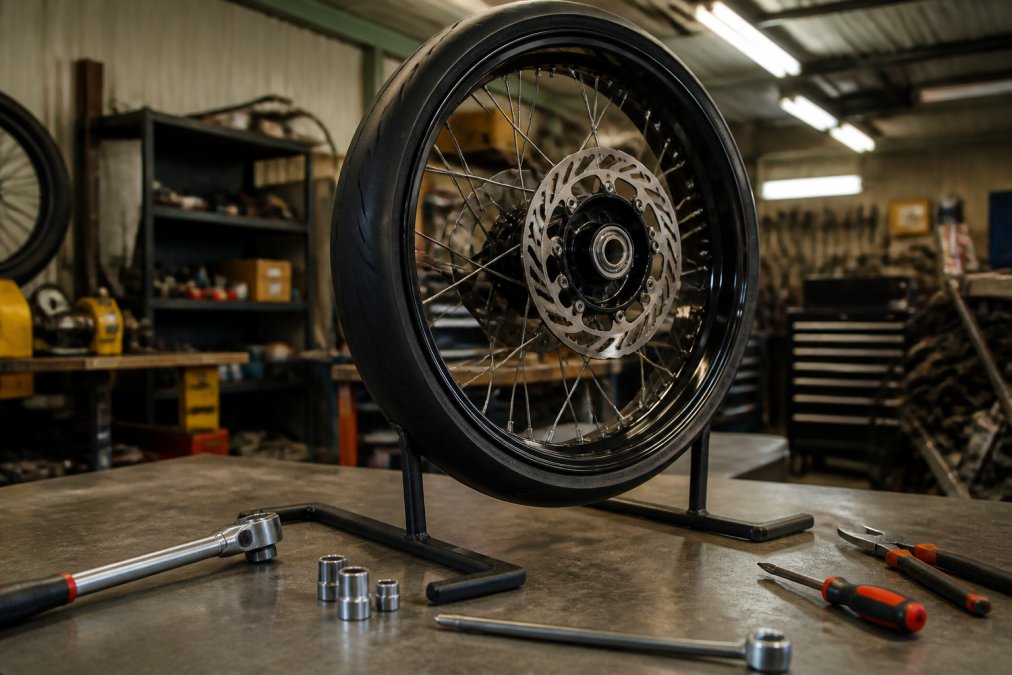
Before you tighten the axle nuts, spin the wheel and check three things: the rotor runs true in the caliper with no drag, the chain line is straight when viewed from behind the bike, and the tire clears the fork legs and swingarm at full compression. If any of those three fails, stop and re-measure rather than forcing the install.
Supermoto Sprocket Sizing Guide for Track Gearing
Track gearing is where most riders leave time on the table. A smaller front sprocket or larger rear sprocket shortens gearing for tighter circuits; the reverse suits fast layouts with long straights. Most track riders keep a spare rear sprocket on hand and swap between sessions.
How to think about ratios, not just tooth counts
The number that matters is the final drive ratio: rear sprocket teeth divided by front sprocket teeth. A higher ratio means more acceleration and a lower top speed; a lower ratio means the opposite. Two builds with the same ratio will feel similar even if the individual sprocket sizes differ, which is why experienced riders compare ratios rather than counting teeth.
A practical approach for a supermoto track build:
- Start with the stock ratio as your baseline and note your top speed at the end of the longest straight.
- If you are hitting the rev limiter before the braking zone, go up one or two teeth on the rear (or down one on the front) to shorten gearing.
- If you are not reaching peak power before the braking zone, go the other way.
- Change one variable at a time and log the result. Two-tooth rear changes are a common starting increment; one-tooth front changes are larger steps because of the ratio math.
Front vs rear: which to change
Changing the front sprocket is cheaper and faster, but it also changes the chain line and can accelerate chain and slider wear if you go too small. Changing the rear sprocket keeps the front geometry intact but requires a longer or shorter chain, and on some chassis a larger rear sprocket will not clear the chain guide or swingarm.
Chain length and wear
Every sprocket change has a chain-length consequence. Going up several teeth on the rear usually requires adding links; going down may require removing them. A chain that is too short will not let the wheel sit in the adjustment range, and a chain that is too long will run out of adjuster before it reaches correct tension.
Why ordering the sprocket with the wheel matters
Because Warp 9 wheels let you select sprocket size at build time, you can order the gearing you need without a separate trip to a parts counter. That is a small detail that saves real time, and it means the sprocket arrives already matched to the wheel’s bolt pattern and offset, rather than you hoping a generic sprocket lines up.
The rotating-mass angle most gearing guides miss
Gearing and wheel weight interact in a way that is easy to overlook. A lighter rear wheel and a lighter rear sprocket reduce rotating mass at the rear axle, which lets the engine spin up faster and makes the bike feel more responsive to throttle input. That change can make a gearing setup that felt lazy on the stock wheels feel sharp on the new ones, so if you are changing wheels and gearing in the same build, do the wheel swap first, ride a session on your baseline gearing, and then adjust teeth from there.
Frequently Asked Questions
What are the best supermoto wheels for track use in 2026?
The strongest options for 2026 track days include Haan Wheels with RK Excel rims, Movetronix Signature with 6061-T6 CNC hubs, Milk Racing for Surron and Talaria platforms, and Warp 9 wheel sets. Warp 9 wheels from Motoxindustries.com are built to order using parts specific to your bike, so they fit like stock wheels without modification and come with a warranty. Match the wheel to your chassis, rim width, and tire profile before buying.
Do aftermarket supermoto wheels require modifications to install?
It depends on the set. Warp 9 wheels are built to order with the correct axle spacers, bearing seals, and cush drive for your specific model, so they bolt on like stock with no modification. Other brands may need custom spacers or brake rotor shimming. Always confirm bolt-on fitment, brake rotor clearance, and sprocket sizing before ordering so you are not waiting on missing hardware mid-build.
What is the best rim size for supermoto track days?
Most track-day supermoto builds run 17-inch rims front and rear. A 3.5-inch front and 4.25 to 5.0-inch rear rim width fits common track-only compound tires well and keeps the tire profile predictable at full lean angle. Smaller rims limit tire choice, and wider rims can rub the swingarm on some conversions. Check clearance at full suspension travel before committing to a width.
How do I choose the right sprocket size for my supermoto wheels?
Start with your rear sprocket tooth count and the track layout. Shorter, tighter circuits favor a larger rear sprocket for quicker acceleration, while longer tracks suit a smaller rear for higher top speed. Warp 9 lets you pick the sprocket size when you order the wheel set, which avoids mismatched bolt patterns. Confirm chain length and axle adjustment range after any sprocket change.
Are custom-built supermoto wheels worth the investment?
For track days, yes. Built-to-order wheels use hubs, spokes, and rims matched to your bike and riding, which improves spoke tension consistency, rotational mass, and brake rotor alignment. Warp 9 wheels are built to order with your color, tire, and sprocket choices and ship with a warranty. Budget sets can work for street use, but track riders notice the difference in cornering stability and unsprung weight.
Track-day wheel shopping rewards patience and specificity. The wrong set costs you a season of fitment headaches; the right one disappears under you and just works. At Moto X Industries, we stock Warp 9 wheels built to order for your exact bike, with customizable colors, tire options, and sprocket sizing, free shipping, and a warranty behind every set. Get started with Supermoto wheels and tires and ride into your next track day on wheels that fit like they came from the factory.