Table of Contents
- Billet vs Cast Supermoto Wheels: How They Differ
- Supermoto Wheel Weight Comparison: Unsprung Mass and Rotational Inertia
- Durability and Impact Resistance: Track Abuse vs Street Miles
- Cost, Tolerance Control, and Where the Money Goes
- Supermoto Conversion Wheel Fitment: Hub Design, Rim Profile, and Tubeless vs Tubed
- Racing vs Street Use: Which Billet or Cast Wheel Fits Your Riding
- Conclusion
- Frequently Asked Questions
Last Updated: October 2, 2026
Billet vs Cast Supermoto Wheels: How They Differ
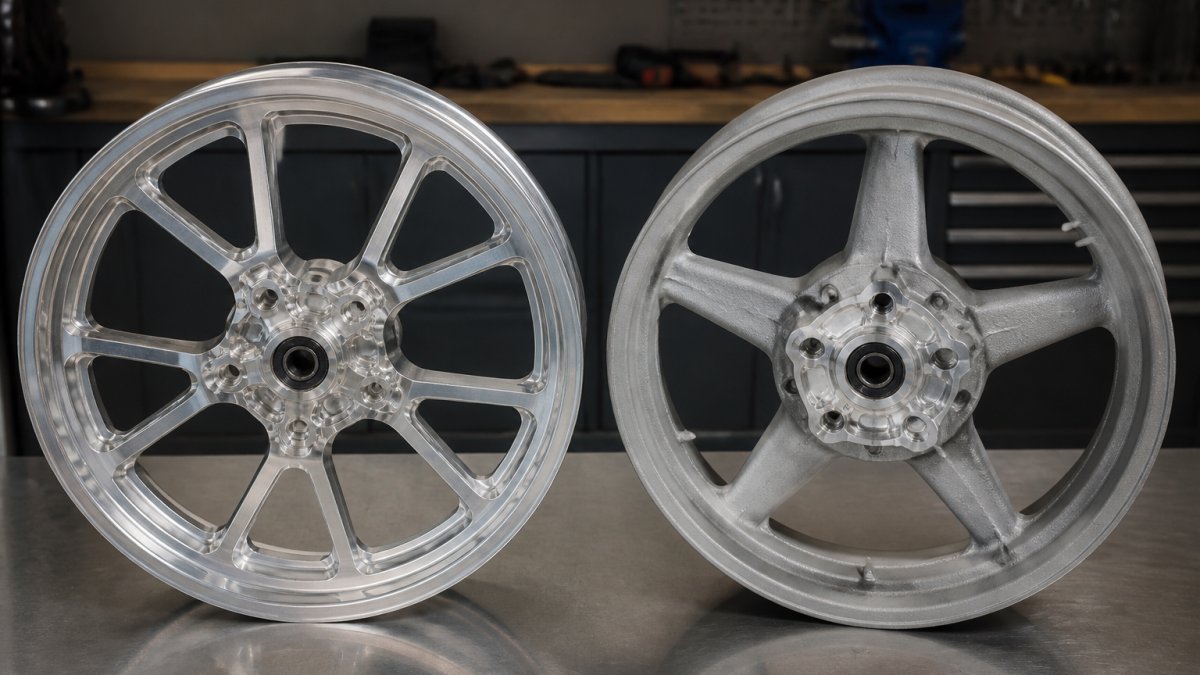
Comparing billet vs cast supermoto wheels comes down to one core split: cast wheels are poured from molten aluminum into a mold, while billet wheels are CNC-machined from a solid block of forged aluminum. That difference in how the metal is formed changes density, strength, weight, and price. This guide breaks down where each type earns its keep, from track-day abuse to daily street miles.
Cast wheels dominate OEM fitments because they’re cheap to mass-produce. Billet wheels exist because racers wanted tighter tolerance control and fewer internal flaws. Both are aluminum. Both can be strong.
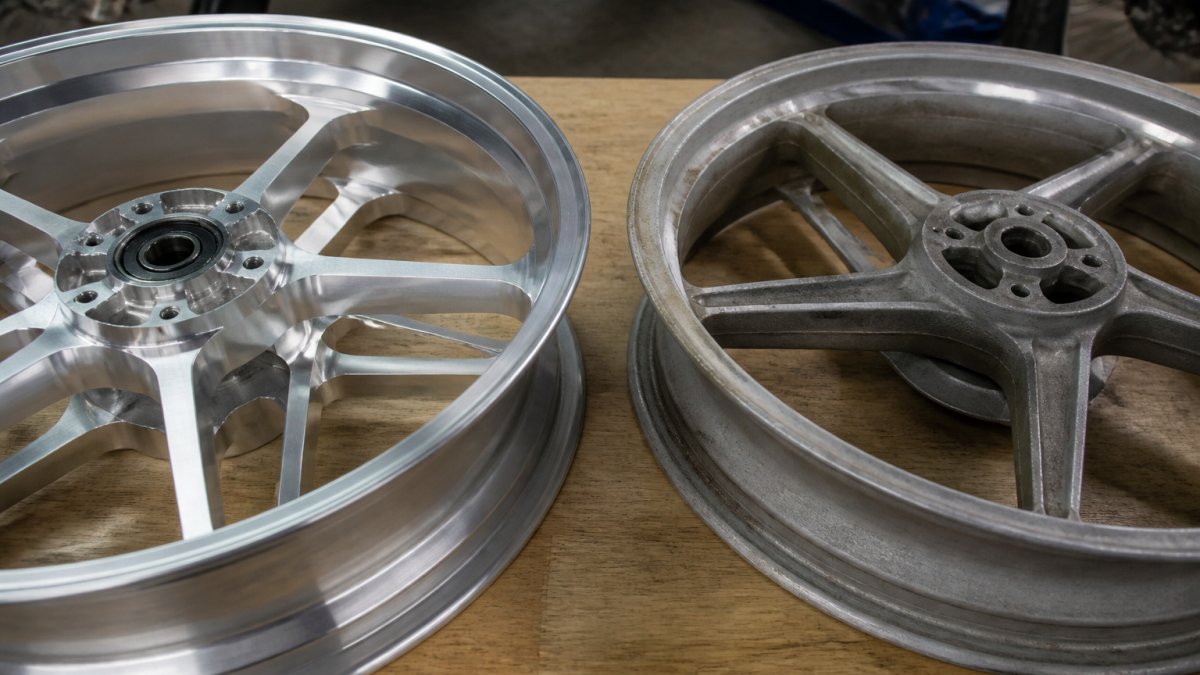
The manufacturing method, not the material, is what separates billet from cast. Aluminum is aluminum; how you shape it decides everything else.
Casting vs Billet Machining: The Manufacturing Split
Casting pours molten aluminum into a mold, letting it cool into shape. It’s fast, inexpensive, and produces complex rim profiles in one shot.
Billet machining starts with a solid billet of forged aluminum. A CNC machine carves the wheel out of that block, removing material until the final shape emerges.
The catch? You’re paying for machine time and wasted material. That’s the whole cost story in a nutshell.
Material Density, Porosity, and Tensile Strength
Material density and structural integrity favor billet, but not as dramatically as marketing suggests. A well-made cast wheel from a reputable manufacturer can hit solid tensile strength numbers.
Alloy composition matters here too. Both processes use aluminum alloys, often with silicon or magnesium added for strength.
What most guides miss: a cheap cast wheel isn’t weak because casting is bad. It’s weak because corners get cut on alloy quality and cooling time.
Supermoto Wheel Weight Comparison: Unsprung Mass and Rotational Inertia
Billet wheels are typically lighter, and that weight sits in the worst possible place: unsprung mass. Every gram at the wheel has to be accelerated, braked, and absorbed by the suspension.
Rotational inertia is the bigger deal for supermoto. Inertia scales with mass times radius squared, so mass removed near the rim (the tire bead seat, the spoke tips, the outer lip) pays off far more than mass removed at the hub.
| Factor | Billet Wheels | Cast Wheels |
|---|---|---|
| Typical weight | Lighter, especially at the rim | Heavier, mass biased toward hub |
| Rotational inertia | Lower | Higher |
| Tolerance control | Tighter (CNC repeatable) | Looser (mold wear, draft angles) |
| Rim sealing for tubeless | Machined bead seat, easier to seal | As-cast bead seat, sealing varies |
| Best for | Track, performance builds | Budget, street, OEM replacement |
Benefits of Lightweight Wheels for Supermoto Handling
The benefits of lightweight wheels for supermoto show up in three places: acceleration, braking, and direction changes.
Braking improves for the same reason. The caliper has less spinning mass to slow, so stopping distances tighten and brake fade drops on repeated hard laps.
Cornering is where it gets fun. Lower rotational inertia lets the bike flick side to side with less effort, which is exactly what supermoto geometry rewards.
Why Rim Mass Matters More Than Total Wheel Weight
Two wheels can weigh the same on a scale and behave completely differently on the track. What matters is where the mass sits relative to the axle.
This is why comparing spec-sheet weights alone is misleading. Ask where the weight was removed, not just how much. A wheel that’s 1 lb lighter at the rim is worth more to handling than a wheel that’s 2 lb lighter at the hub.
Tubeless vs Tubed: The Hidden Weight and Handling Factor
Tubeless rims hold air without an inner tube, which removes the tube’s rotating mass and lets a punctured tire seal around the object instead of deflating instantly.
Billet rims are typically easier to run tubeless because the bead seat is machined to a consistent profile, so a tubeless tire seals predictably. Cast rims can be run tubeless too, but the as-cast bead seat varies more, and some riders end up relying on a tube or a sealant to hold air.
If you’re chasing lap times, spend your money on wheels before engine work. Reducing rotational inertia helps acceleration, braking, and cornering at once, which no exhaust or tune can match. And if you’re going tubeless, prioritize a rim with a machined bead seat, it’s the difference between a reliable seal and a slow leak you chase all season.
How to Judge Wheel Weight Claims
When you compare wheels, look past the marketing weight number. Ask three questions: Where was the mass removed? Is the wheel rated for tubeless? And does the manufacturer publish a rim weight separately from the assembled weight? A wheel that’s light at the rim, tubeless-ready, and sold with a published rim weight is doing the real work. A wheel that’s light overall but heavy at the lip is just a lighter version of the same problem.
For riders doing a conversion, Moto X Industries stocks specialized supermoto conversion kits and billet-hub wheel sets built for the motocross-to-supermoto transition. The catalog also covers electric bikes like Surron and Talaria, plus a deep inventory of motocross racing wheels and components.
Durability and Impact Resistance: Track Abuse vs Street Miles
Impact resistance is where the argument gets honest.
Fatigue life favors billet for the same reason. A dense, consistent grain structure handles repeated stress cycles better than a porous casting.
Street riders have a different reality. A cast wheel that never sees a track day will likely outlast the bike.
The honest limitation: billet isn’t indestructible. A bad enough hit bends any wheel. Billet just gives you more margin before it cracks.
Cost, Tolerance Control, and Where the Money Goes
Cost is the clearest divider. Cast wheels are cheap because the mold does the work in one pour.
Where does the money actually go? Machine time, tighter tolerance control, better alloy composition, and quality inspection. You’re paying for consistency, not magic.
For a cost-benefit analysis, ask what you’re buying. If you want OEM-replacement reliability at a low price, cast wins.
Don’t judge a wheel by price alone. A cheap cast wheel with poor alloy quality can crack under loads a well-made cast wheel handles fine. Ask about the manufacturer’s quality control before you buy on price.
Supermoto Conversion Wheel Fitment: Hub Design, Rim Profile, and Tubeless vs Tubed
Supermoto conversion wheel fitment is where most builds go wrong. You need the right hub spacing, axle diameter, brake rotor mount pattern, and rim width for your specific bike.
Hub design matters more on supermoto than on a dirt-only bike. Billet hubs resist flex under hard braking, which keeps the brake feel consistent when you’re trail-braking into a corner. Cast hubs flex more, and you feel it through the lever.
Rim profile decides tire fit and whether you can run tubeless. Tubeless rims hold air without an inner tube, which reduces weight and lets a punctured tire seal around the object. Tubed rims need an inner tube and are common on older or budget setups. Check whether your chosen tire and rim are tubeless-compatible before you commit.
Supermoto-Specific Geometry and Handling Dynamics
Supermoto geometry rewards quick direction changes and stable braking. A wheel with reduced hub flex and lower rotational inertia plays directly into that.
Wheel rigidity is a balancing act. Too stiff and the wheel skips over bumps; too flexy and it feels vague.
Cornering performance on a supermoto depends on the front and rear working together. A light front wheel sharpens turn-in; a stiff rear hub keeps drive consistent on exit.
Racing vs Street Use: Which Billet or Cast Wheel Fits Your Riding
Racing and track days justify billet. The weight savings, tighter tolerance control, and better fatigue life pay off lap after lap.
Street and casual riding favor cast. You get reliable performance at a lower price, and you won’t notice the weight difference on a commute.
The middle ground is a supermoto conversion build where you want durability and decent handling without a race budget.
For riders doing a conversion, Moto X Industries stocks specialized supermoto conversion kits and billet-hub wheel sets built for the motocross-to-supermoto transition. The catalog also covers electric bikes like Surron and Talaria, plus a deep inventory of motocross racing wheels and components.
Conclusion
Picking between billet and cast supermoto wheels is really a question about how hard you ride and what you’re willing to spend. Billet wins on weight, consistency, and durability; cast wins on price and everyday reliability.
When you’re ready to upgrade, Moto X Industries carries specialized supermoto conversion kits, billet-hub wheel sets, and many parts for electric bikes including Surron and Talaria. Shop now and get the right wheels for your build.
Frequently Asked Questions
What are the primary performance differences between billet and cast supermoto wheels?
Billet wheels are CNC-machined from a solid block of aluminum, which gives them more consistent material density, tighter tolerance control, and a higher strength-to-weight ratio than cast wheels. Cast wheels are made by pouring molten aluminum into a mold, which is faster and cheaper but can leave porosity and variation in density. In practice, billet wheels flex less under cornering and braking loads, while cast wheels are heavier and less predictable at the limit.
How does wheel weight affect supermoto handling?
Wheel weight is unsprung mass, so every ounce counts. Lighter wheels reduce rotational inertia, which means quicker acceleration, shorter braking distances, and faster direction changes. Riders notice it most in flickability through tight chicanes and in how quickly the bike settles after a hard brake. A supermoto wheel weight comparison usually shows billet sets running lighter than comparable cast options, which is one of the main reasons track riders pay more for them.
Are billet wheels more durable than cast wheels for supermoto racing?
For racing, billet wheels generally hold up better. The machining process removes internal voids that can weaken castings, so billet rims resist impact and fatigue better over repeated track sessions. Cast wheels are fine for street use and light track days, but they are more prone to cracking at the bead seat after hard hits. If you race regularly or ride rough street circuits, billet is the safer long-term investment.
Is the cost difference between billet and cast wheels worth the performance gain?
It depends on how you ride. Cast wheels cost less up front and work well for casual street riding and occasional track days. Billet wheels cost more because of the machining time and tighter quality control, but they deliver measurable gains in weight, rigidity, and consistency. If you are chasing lap times or doing a serious supermoto conversion, the performance gain justifies the price. For weekend cruising, cast is often enough.
What should I check for supermoto conversion wheel fitment?
Start with axle diameter, hub width, and brake rotor bolt pattern, since these vary by bike model. Then confirm rim width and offset match your tire choice, and check whether the rim is tubeless or tubed, because that affects tire selection and maintenance. Supermoto conversion wheel fitment also depends on swingarm clearance and fork spacing. Measure your stock wheels first, or check with a specialist who stocks conversion kits for your specific model.